
Here’s a mistake thousands of bearded dragon owners make: they choose greens based on what’s easy to find at the grocery store, not what’s actually good for their dragon. Romaine lettuce, iceberg, and baby spinach dominate bearded dragon bowls across the country. None of them should.
The vegetables you choose determine calcium absorption, hydration, gut health, and long-term bone density. Get this right, and you’ll see the difference in your dragon’s energy and coloring within weeks.

Don't pick my greens by what's cheapest at the store, pick them by calcium. Collards, mustard, dandelion, and turnip greens build strong bones. Iceberg and spinach work against them. And keep rotating: variety is the mechanism, not the goal.
🥦 Why Vegetable Choice Is More Than a Preference
Most bearded dragon resources treat vegetables as interchangeable. They’re not.
The calcium-to-phosphorus (Ca:P) ratio of every vegetable you feed directly affects whether your dragon can absorb and use calcium. When phosphorus exceeds calcium, it acts as an antinutrient-binding calcium in the gut before it can enter the bloodstream.
The result over time? Metabolic bone disease (MBD)-a condition where bone calcium is leached to maintain normal body function. A bearded dragon with MBD develops soft bones, tremors, and eventually an inability to move normally.
This alone makes vegetable selection a health decision, not just a feeding preference.
The rule: Feed vegetables where calcium equals or exceeds phosphorus. Rotate widely to cover a full spectrum of micronutrients.
🏆 The Best Daily Staple Greens for Bearded Dragons
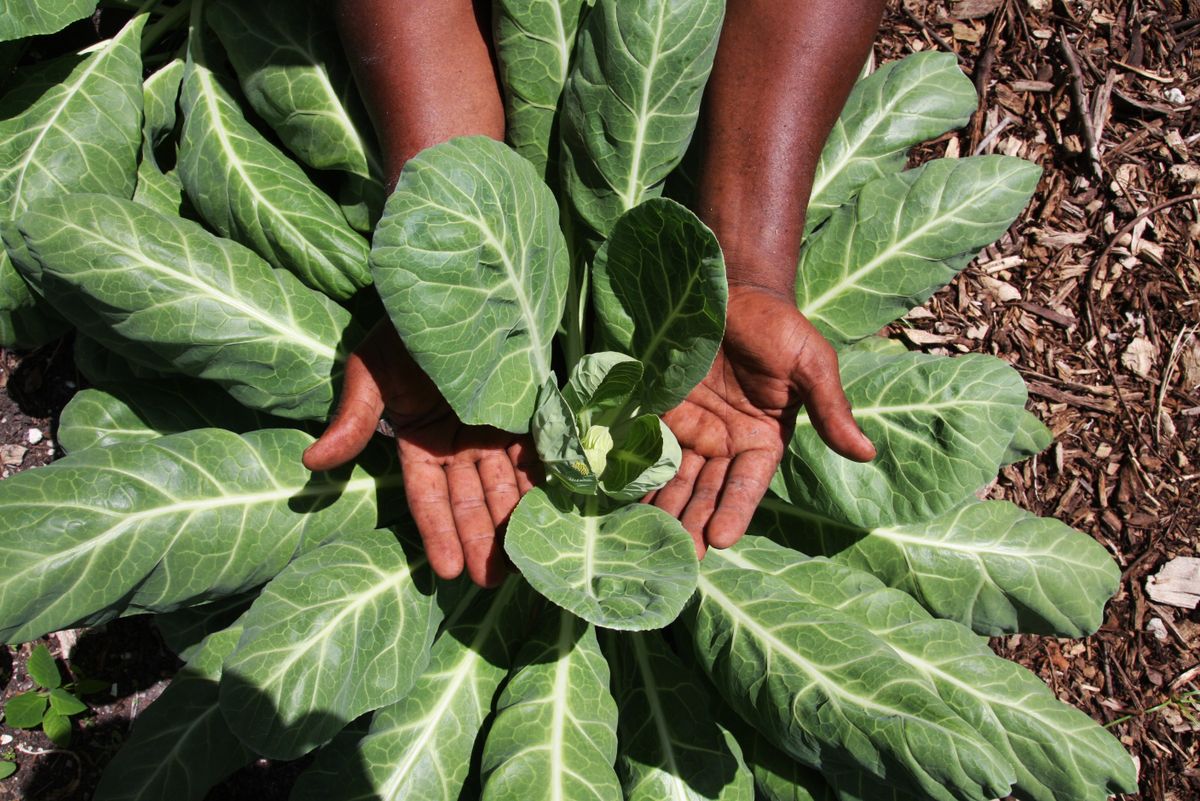
These greens should rotate through your dragon’s bowl every single day. They combine strong calcium-to-phosphorus ratios, moderate oxalate levels, and good fiber content.
Collard Greens The single best staple green for bearded dragons.
Collard Greens
The single best staple green for bearded dragons. Collard greens have an excellent Ca:P ratio of approximately 5:1, are widely available, and are accepted by most dragons readily. High in vitamin C, vitamin K, and folate.
Mustard Greens
Slightly spicy, which most dragons find stimulating. Strong Ca:P ratio, rich in vitamins A and C. Excellent rotation partner for collard greens to prevent boredom and nutritional gaps.
Dandelion Greens
One of the most nutritionally dense greens available for reptiles. High in calcium, potassium, and vitamins A and C. The flowers are also safe and often preferred. Critical caveat: only feed dandelion greens that are confirmed pesticide-free. Lawn dandelions are not safe.
Turnip Greens
High calcium, good fiber, and often consumed enthusiastically. Turnip greens are a consistent performer in bearded dragon diets and handle well when mixed with other greens.
Endive and Escarole
Mild, slightly bitter, and highly palatable to most dragons. Both have favorable Ca:P ratios and make excellent variety additions to a staple rotation.
Watercress
Higher in nutrition per gram than almost any other common salad green. Strong source of calcium, iron, and vitamins A and C. Use regularly as a rotation option.
🥕 Best Rotational Vegetables to Add Variety
Beyond daily greens, a strong vegetable rotation prevents nutritional gaps and keeps your dragon engaged with its food. These vegetables are safe, nutritious, and should appear in the bowl several times per week.
- Butternut squash-high in vitamin A, soft texture, usually well accepted. Serve raw or slightly cooked (no seasoning).
- Bell peppers (all colors), High in vitamin C and antioxidants. Red peppers are the most nutrient-dense. Easy to dice and mix into a salad.
- Acorn squash-Similar to butternut, a good source of vitamins A and C. Soft and easy to prepare.
- Snap peas are high in fiber and vitamin C. Serve whole or chopped depending on dragon size.
- Okra-surprisingly nutritious, moderate calcium, good vitamin K content.
- Yellow squash / zucchini-High water content, mild flavor, easy to digest. Good for hydration support.
- Cucumber, Mostly water (96%), minimal nutritional value, but useful during warm periods to support hydration. Not a nutritional staple.
Here’s where things change: you’re not trying to find the single perfect vegetable. You’re trying to build a weekly rotation broad enough to hit every essential vitamin and mineral without relying on supplements to fill every gap.
⚠️ Vegetables to Feed Only Occasionally
These vegetables are not toxic, but regular feeding creates problems worth avoiding.
Kale
Kale has a strong cult following in the reptile community. The issue: it contains goitrogens, compounds that interfere with thyroid function when consumed in large, frequent amounts. Fed once or twice a week in rotation, kale is fine. Fed daily as a staple, it creates real thyroid risk over time.
Spinach
High in oxalates, which bind calcium and prevent absorption. Not toxic in small amounts, but counterproductive in a diet already working to maximize calcium intake. Use sparingly and never as a primary green.
Beet Greens
Similar to spinach in oxalate content. Nutritious in other ways, but the calcium-binding effect makes frequent feeding a poor trade-off for dragons prone to MBD or with marginal UVB setups.
Carrots
High in beta-carotene, which is a precursor to vitamin A. Safe in moderation. However, excess vitamin A from dietary sources combined with vitamin A supplementation can lead to hypervitaminosis A. Feed a few times per week, not daily.
Broccoli
Goitrogens again, combined with high oxalates and a moderate phosphorus load. Not toxic, but not a wise staple. Occasional inclusion in rotation is acceptable.
🚫 Vegetables to Avoid Entirely
Some vegetables are genuinely dangerous. Others are simply waste in the bowl.
- Iceberg lettuce, Approximately 96% water, virtually no nutrients. Regular feeding displaces nutritious foods and can cause diarrhea. Never use as a primary or even secondary green.
- Onions and garlic, Contain thiosulfinates and organosulfur compounds that cause blood cell destruction in reptiles. Toxic even in small amounts.
- Rhubarb, Extremely high oxalic acid content. Causes kidney damage and can be lethal. Never feed.
- Avocado, Contains persin, which is toxic to reptiles. The entire plant is dangerous, including the fruit and skin.
- Wild-foraged plants (unverified), Risk of pesticides, herbicides, and parasites. Only feed commercially grown, washed produce or plants you’ve grown yourself from clean seed stock.
📚 Recommended Reading: What Do Bearded Dragons Eat? The Complete Diet Guide.
📋 Bearded Dragon Vegetable Feeding Chart
| Vegetable | Ca:P Ratio | Feed Frequency | Notes |
|---|---|---|---|
| Collard greens | ~5:1 | Daily | Best staple |
| Mustard greens | ~2:1 | Daily | Good rotation |
| Dandelion greens | ~3:1 | Daily | Pesticide-free only |
| Turnip greens | ~4:1 | Daily | Mix with other greens |
| Endive | ~2:1 | Daily | Palatable and safe |
| Bell peppers | ~0.5:1 | 3-4x/week | High vitamin C |
| Butternut squash | ~1:1 | 3-4x/week | Good vitamin A source |
| Snap peas | ~0.7:1 | 3x/week | Good fiber |
| Zucchini | ~0.7:1 | 3x/week | Hydration support |
| Kale | ~2:1 | 1-2x/week | Goitrogens, limit |
| Spinach | Low net | 1x/week max | Oxalates bind calcium |
| Broccoli | ~1.5:1 | 1-2x/week | Goitrogens, limit |
| Carrots | ~0.7:1 | 2-3x/week | Vitamin A, don’t overdo |
| Iceberg lettuce | Poor | Avoid | No nutritional value |
📚 See also: the complete bearded dragon food chart-every safe and unsafe food listed by category.
✅ Takeaways
- Vegetable selection directly affects calcium absorption and long-term bone health, it’s not just a preference
- Collard greens, mustard greens, dandelion greens, and turnip greens are the strongest daily staples
- Prioritize vegetables with a calcium-to-phosphorus ratio of 1:1 or higher
- Kale and spinach are safe occasionally but problematic as staples, goitrogens and oxalates are real concerns
- Avoid iceberg lettuce, onions, garlic, rhubarb, and avocado entirely
- A rotating variety of safe vegetables beats a fixed daily menu for nutritional completeness
- Pairing strong greens with proper UVB lighting and calcium supplementation is what actually prevents metabolic bone disease
Your dragon’s bowl should look different every few days. Variety is the mechanism, not the goal.
Common questions
What is the best vegetable for bearded dragons?+
Can bearded dragons eat kale every day?+
Why is spinach bad for bearded dragons?+

Beardies World Editorial Team
Every guide on Beardies World is written and maintained by our editorial team. We are not veterinarians, and these guides are general care information, not a substitute for an exam. If your dragon seems unwell, see a reptile vet. If you spot a mistake, email info@beardiesworld.com and we will correct it.
How we write and correct our guides →