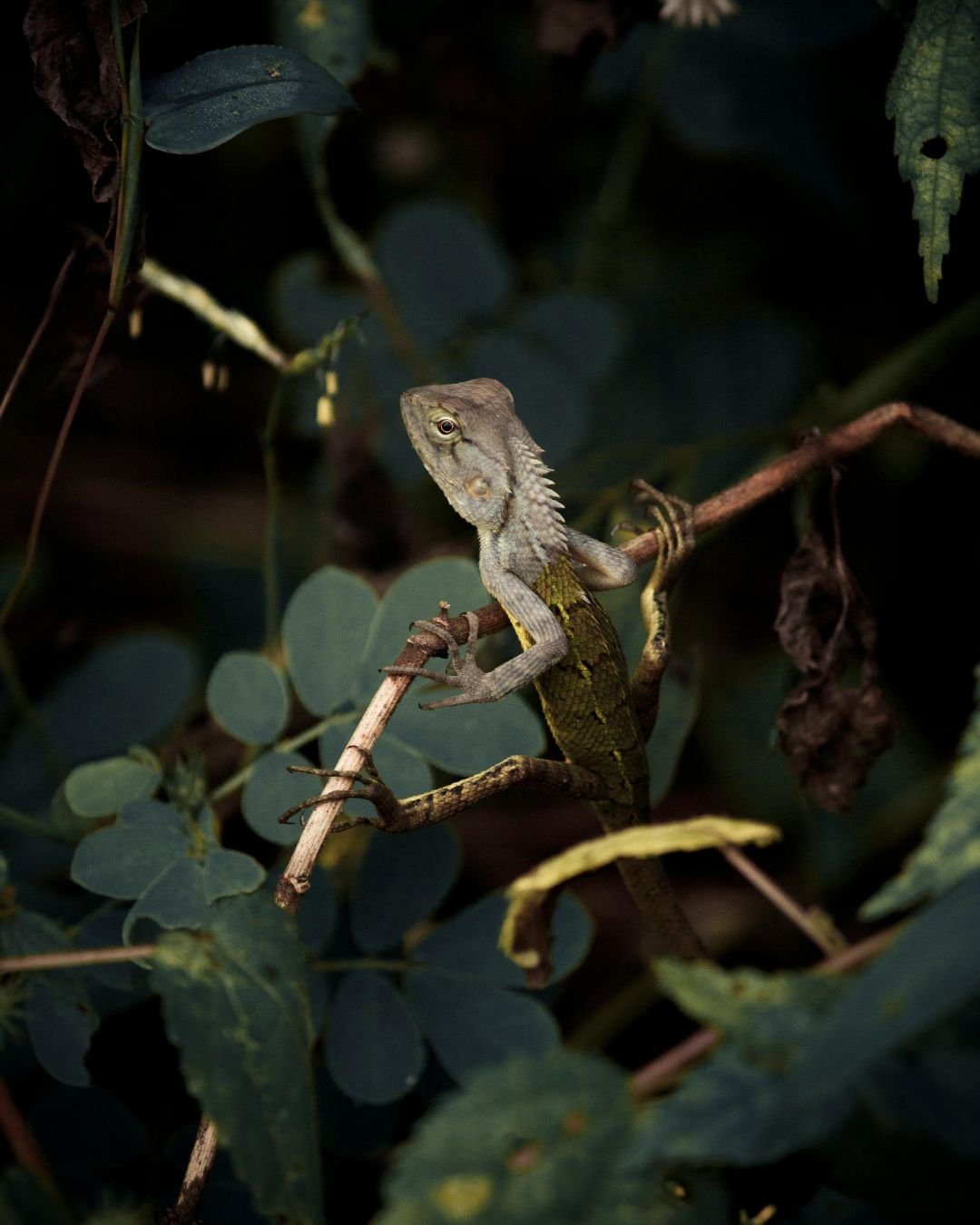
New bearded dragon owners ask this question constantly, get different answers from every source, and end up guessing. And because baby bearded dragons are growing faster than almost any captive reptile in the hobby, getting the feeding quantity wrong, in either direction, has visible consequences within weeks.
The answer is more specific than most guides provide. Here it is.

As a baby, don't count my crickets, set a 10-to-15-minute timer three times a day and let me eat all I can. Just never a cricket wider than the gap between my eyes: too big can press on my spine or block my gut.
🐛 How Many Crickets for a Baby Bearded Dragon? The Direct Answer
There is no fixed number. The correct quantity for a baby bearded dragon is as many appropriately sized crickets as it will eat in a 10-15 minute window, fed three times per day.
That answer frustrates people who want a specific number, but here’s why it’s the right framework: baby bearded dragons grow at dramatically different rates, have different appetites on different days, and will naturally self-regulate within a feeding session if given appropriate access to food.
A rough real-world reference: most healthy baby bearded dragons consume between 20 and 50 crickets per day across three feeding sessions, though this varies significantly by age, size, and individual metabolism. A very young hatchling (4-8 weeks) might eat 15-20 per day. A baby approaching the juvenile transition at 3 months may eat 60+.
Use the 10-15 minute method, not a fixed count. The dragon tells you how many it needs.
📏 The Size Rule: Why This Matters As Much As Quantity
The single most important feeding safety rule for baby bearded dragons: never feed crickets larger than the space between the dragon’s two eyes.
This is not a suggestion. It’s an impaction and neurological injury prevention rule.
Prey items too large for a baby’s head can:
- Cause spinal cord pressure: When swallowed, an oversized cricket creates pressure in the esophagus and gut that can press against the developing spinal cord. This is one of the documented causes of sudden hind limb paralysis in baby bearded dragons, a devastating and often irreversible outcome.
- Create impaction: Oversized prey items in a baby’s gut can block the digestive tract, causing lethargy, bloating, and potentially death if not resolved.
- Make feeding sessions exhausting: A baby struggling to eat oversized prey isn’t actually feeding effectively, it’s working too hard to consume each piece and eating less than it needs.
For the first 4-6 weeks: Use 1/4-inch (pinhead) crickets. These are tiny, about the size of a small grain of rice. They’re the only safe size for hatchlings.
For 6-10 weeks: Transition to 1/4-3/8-inch crickets as the dragon grows and its eye-width increases.
For 10-16 weeks: Most juveniles can handle 3/8-inch crickets.
For 10-16 weeks: Most juveniles can handle 3/8-inch crickets. Measure visually before every feeding until eye-width assessment becomes second nature.
⏱️ The 10-15 Minute Method Explained
Here’s how the method works in practice:
- Prepare crickets: Gutload for 24-48 hours before feeding (see supplements section). Dust with calcium supplement immediately before placing in the enclosure.
- Place crickets in the enclosure. Don’t use a bowl, babies need the visual stimulus of moving prey to trigger feeding drive. Place crickets directly on the enclosure floor.
- Set a timer for 10-15 minutes.
- Let the baby hunt freely. Healthy babies are active hunters during feeding sessions. A baby that’s ignoring crickets after the first few minutes may be satiated, too cold, or not well.
- Remove all remaining crickets. Loose crickets left overnight will bite a sleeping dragon, creating stress wounds that can become infected. This step is non-negotiable.
What a successful session looks like: Active hunting behavior for the first 5-8 minutes, slowing as satiation approaches, and most crickets consumed by the 12-15 minute mark. A baby that clears every cricket within 5 minutes may need a slightly larger batch. One that eats 5-6 and stops probably isn’t feeling well or is too cold.
Temperature check before every feeding: Basking spot must be at 100-110°F. A baby that can’t thermoregulate properly cannot digest food effectively. If the enclosure is cold, the baby won’t eat, and that’s the correct physiological response.
📅 How Often Should Baby Bearded Dragons Eat Crickets?
Three times per day. This is the correct feeding frequency for babies from hatch through approximately 3 months.
Most owners underfeed babies by feeding once or twice a day and wondering why growth is slow. Baby bearded dragons have metabolic demands that require near-continuous caloric support during peak growth. Three sessions per day reflects that reality.
Practical scheduling:
- Morning session: shortly after lights come on and basking spot reaches temperature (usually 30-45 minutes after light activation)
- Midday session: 4-6 hours after morning feeding
- Afternoon/early evening session: 2-3 hours before lights off, giving the baby enough active time to hunt and digest before sleeping
Don’t feed right before lights-off. Undigested food in a cold, sleeping gut causes fermentation and digestive issues.
Greens alongside crickets: Offer fresh greens every day even if the baby ignores them. Most babies prioritize insects, that’s normal. Consistent early exposure to greens is what builds acceptance for the adult diet transition that becomes critical after 12 months.
💊 Supplementing Crickets for Babies: What’s Required
Baby bearded dragon supplementation is non-negotiable. Their growth rate creates calcium and vitamin demands that food alone cannot meet.
Every feeding session: Calcium without D3 (if under adequate UVB lighting). Dust crickets by placing them in a bag or cup with calcium powder and shaking gently until lightly coated.
If UVB is suboptimal: Use calcium with D3 instead of, or alternating with, calcium without D3. Consult your UVB setup specs.
Twice per week: Reptile multivitamin. Same dusting method. Don’t use multivitamin every session, excessive vitamin A supplementation from a multivitamin can cause toxicity in babies over time.
Gutloading: Every batch of crickets should have eaten a nutritious diet for 24-48 hours before being fed to your dragon. Use dark leafy greens (collard, mustard, dandelion), squash, and commercial gutload formula. A poorly gutloaded cricket delivers dramatically less nutrition than a well-fed one. This step directly determines how much calcium, protein, and micronutrients your baby actually absorbs.
⚠️ Signs You’re Underfeeding (and Signs You’re Overfeeding)
Signs of underfeeding:
- Slow growth, a healthy baby grows visibly week over week; if you’re not seeing weekly length increases, evaluate caloric intake
- Visible hip bones or spine (thin, angular body shape)
- Lethargy between feeding sessions, active babies should be alert and responsive in the hours between meals
- Dark coloring in a warm enclosure (though this has many causes)
Signs of overfeeding (less common in babies, but possible):
- Bloated appearance, abdomen that looks distended or unusually round
- Food refusal, a baby that eats eagerly for the first few minutes and stops is self-regulating appropriately; one that refuses from the start may have been overfed at the previous session
- Very soft or runny stools consistently, can indicate overconsumption of high-moisture prey items
The most reliable growth metric: Measure your baby’s snout-to-vent length (SVL) and total length weekly. A healthy baby gains length predictably. Stagnant measurements over two weeks indicate something is wrong with diet, temperature, or health.
🦟 Are Crickets the Best Feeder for Baby Bearded Dragons?
Crickets are the most widely available feeder insect and work well for babies, but they’re not the single best option. Here’s how the comparison stacks up:
Dubia roaches (small nymphs): Superior to crickets in protein and Ca:P ratio, lower odor, easier to contain. If you can access small dubia nymphs, they’re a better primary feeder than crickets for baby bearded dragons.
Black soldier fly larvae (small): Naturally calcium-rich, soft-bodied, excellent digestibility. Useful as a rotation alongside crickets or dubias.
Crickets: Widely available, affordable, and the movement pattern stimulates strong hunting drive in babies. A legitimate choice, just supplement consistently given their poor raw Ca:P ratio.
The ideal approach: rotate between two or three feeder types across the week rather than relying on a single insect.
📚 Recommended Reading: Best Insects for Bearded Dragons, Ranked by Nutrition, Not Availability and the complete diet guide What Do Bearded Dragons Eat?
✅ Takeaways
- There is no fixed number, feed as many appropriately sized crickets as the baby will eat in a 10-15 minute session, three times per day
- Most healthy baby bearded dragons eat 20-50 crickets per day across three sessions; this varies by age and size
- Never feed crickets larger than the space between the baby’s eyes, oversized prey causes spinal cord pressure and impaction
- Three feeding sessions per day is the correct frequency for babies; once or twice a day consistently underfeeds them
- Remove all uneaten crickets after every session, loose crickets bite sleeping dragons
- Calcium dust is required at every single feeding session; multivitamin twice per week
- Gutloading crickets for 24-48 hours before each session is not optional, it directly determines nutritional delivery
- Dubia roach nymphs are a nutritionally superior alternative to crickets if available; rotating between two or three feeder types is ideal
Common questions
How many crickets should a baby bearded dragon eat?+
How big should crickets be for a baby bearded dragon?+
How often do baby bearded dragons eat crickets?+

Beardies World Editorial Team
Every guide on Beardies World is written and maintained by our editorial team. We are not veterinarians, and these guides are general care information, not a substitute for an exam. If your dragon seems unwell, see a reptile vet. If you spot a mistake, email info@beardiesworld.com and we will correct it.
How we write and correct our guides →