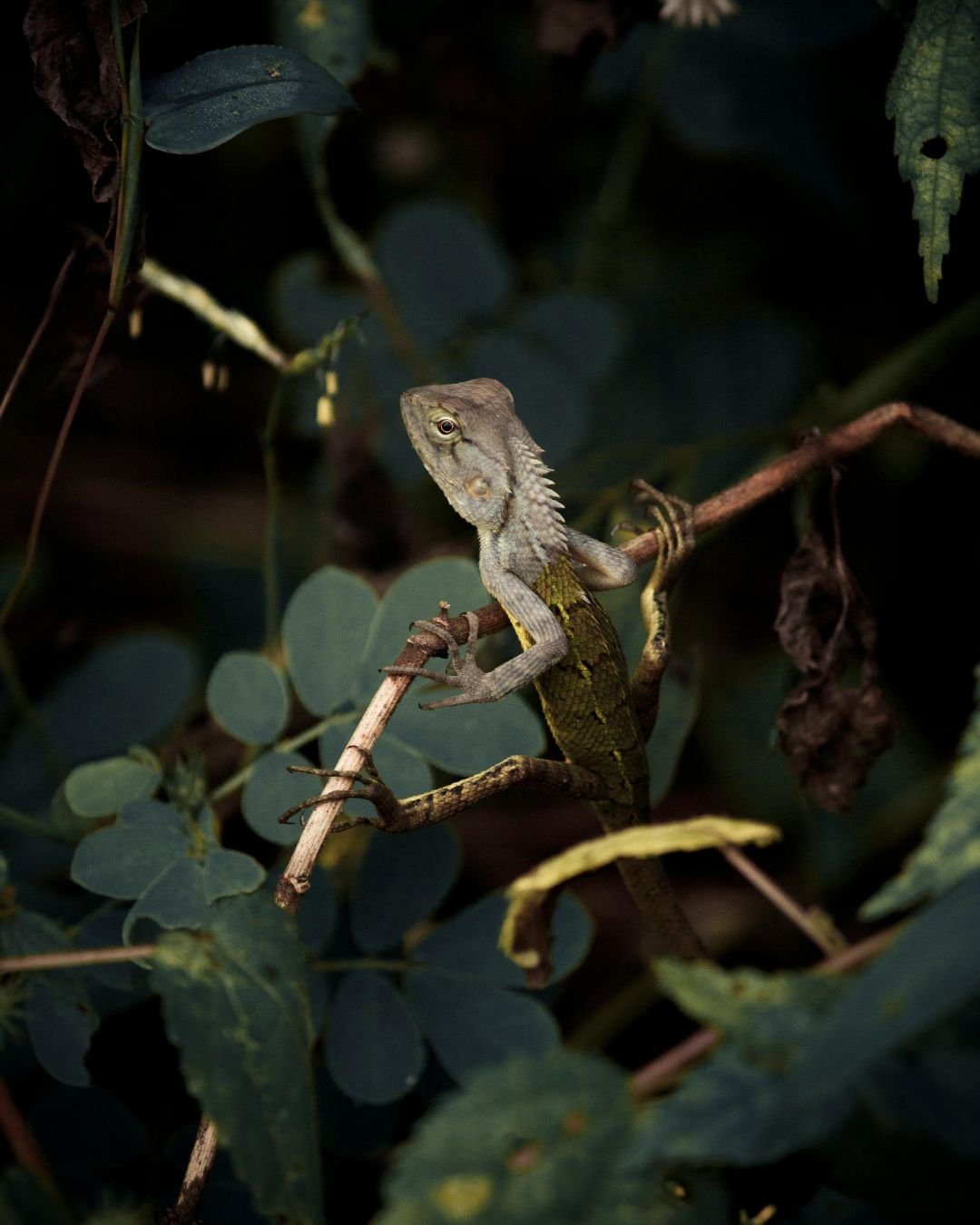
Bearded dragon owners worry about sleep more than almost any other behavior, and understandably, because the line between “sleeping normally” and “lethargic from illness” is not always obvious.
Here’s what a healthy sleep schedule actually looks like, what disrupts it, and how to tell the difference between a well-rested dragon and one that’s sleeping because something is wrong.

Buy the timer. An mechanical outlet timer gives your dragon a genuinely consistent light cycle, and photoperiod is what sets its entire circadian rhythm, sleep, appetite, thermoregulation, all of it. And skip the red and blue "night" bulbs the industry sells: dragons see that light. If the room drops below 65°F, use a ceramic heat emitter, which warms without lighting.
😴 How Much Do Bearded Dragons Sleep?
A healthy adult bearded dragon sleeps approximately 8-12 hours per night, waking when lights come on and becoming active during the day. Most healthy adults are awake and active for the full daylight period, typically 10-14 hours depending on the photoperiod schedule.
Brief daytime resting is normal. A bearded dragon that basks for 2 hours, retreats to a hide for 30-45 minutes, then comes out to forage is doing exactly what it should. Short rest breaks during the day are not the same as all-day sleeping.
Sleeping position: Most bearded dragons sleep lying flat, often on the cool side or in a hide. Some sleep propped slightly against the enclosure wall. What matters is that they’re responsive when the enclosure reaches temperature and lights come on, not the specific position.
🌞 The Diurnal Rhythm: Why Light Schedule Drives Everything
Bearded dragons are diurnal, biologically calibrated to be active during daylight hours and inactive at night. This isn’t preference; it’s deep physiological programming driven by the circadian clock.
The circadian clock is set and maintained by photoperiod, the daily cycle of light and dark. A bearded dragon under a consistent 12-hour light/12-hour dark cycle develops a stable circadian rhythm: predictable sleep time, predictable wake time, predictable appetite peaks, and predictable thermoregulatory behavior.
Disruptions to photoperiod disrupt everything else:
A mechanical outlet timer costs $8-$15 and creates a perfectly consistent photoperiod without any effort.
- Irregular light schedules (manually turning lights on and off at inconsistent times) create circadian drift, the dragon’s biological clock gets out of sync with actual day/night
- Light exposure at night (a TV near the enclosure, ambient room lighting left on) suppresses melatonin production and fragments sleep
- Inconsistent photoperiod across seasons without intentional seasonal adjustment creates confusion about metabolic state
The fix: Timers. A mechanical outlet timer costs $8-$15 and creates a perfectly consistent photoperiod without any effort. This single purchase improves sleep quality, feeding consistency, and overall dragon wellbeing more than almost any other intervention.
📊 Sleep by Age and Season
Sleep needs and patterns change predictably with age and season:
| Life Stage / Season | Expected Sleep Pattern |
|---|---|
| Baby (0-3 months) | 10-12 hours/night; very active during daylight, growth demands keep them energetic |
| Juvenile (3-12 months) | 10-12 hours/night; active during day with brief rest breaks |
| Adult (12+ months, summer) | 8-12 hours/night; full active day |
| Adult (fall, brumation onset) | Gradually increasing sleep; may begin sleeping 12-16 hours |
| Adult (brumation) | Up to 20-22 hours; near-total inactivity for weeks to months |
| Adult (spring, post-brumation) | Returns to normal within 1-3 weeks |
Seasonal change is expected. A dragon that slept 10 hours per night in June and is sleeping 14 hours per night in November is responding normally to shorter days, not getting sick.
Age change is expected. Baby bearded dragons are extraordinarily active during the day. Adult dragons are calmer, rest more between activities, and spend more time in calm basking postures. An adult that looks “less active” than the baby you remember is usually just displaying normal adult behavior.
🔍 Normal vs. Concerning Sleep Patterns
| Feature | Normal Sleep | Concerning Sleep |
|---|---|---|
| Timing | Aligns with dark period | Occurs throughout daylight hours |
| Responsiveness | Awake and alert when lights/temperature reach target | Difficult to rouse; slow to respond even when warm |
| Posture | Normal resting positions | Unusual positions; unable to hold itself up |
| Appetite | Normal after waking | Absent or severely reduced when awake |
| Eyes | Clear when open | Sunken, partially closed during wake periods |
| Duration change | Gradual seasonal shift | Sudden dramatic change without seasonal context |
| Resolution | Ends when enclosure reaches temperature | Persists despite correct temperature |
The most reliable test: A healthy dragon that’s sleeping becomes alert, moves toward the basking spot, and is engaged with its environment within 30-60 minutes of lights coming on and the enclosure reaching temperature. A sick or cold dragon stays lethargic despite warmth.
⚠️ What Disrupts Bearded Dragon Sleep
Light Contamination
The most common and most overlooked sleep disruptor. Sources:
- Television visible from the enclosure, flickering light disrupts sleep
- Ambient room lighting left on overnight
- Red or blue “night” bulbs (these produce light bearded dragons can detect)
- Streetlights or outdoor light through a window near the enclosure
Fix: Move the enclosure to a room that gets genuinely dark at night, or cover the enclosure with a dark cloth during the dark period. Use ceramic heat emitters (no light) for any nighttime heating.
Noise
Bearded dragons don’t have external ears, but they detect vibration through bone conduction and have functional hearing. Loud persistent noise, a television, a music system, a washer/dryer nearby, creates stress that fragments sleep.
Temperature Drops
A room that gets significantly cold at night (below 60°F) disrupts the dragon’s temperature regulation during sleep, leading to fragmented rest and increased daytime lethargy. Nighttime minimum of 65°F is required for quality sleep.
Incorrect Photoperiod
Too-short daylight periods (less than 10 hours) or too-long periods (more than 14 hours) both create circadian disruption. Seasonal adjustment toward shorter photoperiods in fall is appropriate; eliminating consistent light/dark cycles is not.
Pain or Physical Discomfort
A dragon in pain from an underlying condition sleeps fitfully, changes position frequently, and may sleep with unusual body postures. This is often one of the first signs of a developing health issue.
🌙 Nighttime Setup: What Dragons Actually Need
Contrary to common marketing, bearded dragons don’t need:
- Red bulbs at night
- Blue “moonlight” bulbs
- Any visible light source overnight
- Constant background sound
What they do need:
- Genuine darkness, no light sources
- Temperature maintained above 65°F minimum (using a CHE if needed)
- A quiet environment
- Security, a hide or enclosed area where they feel protected
The reptile industry sells “night lighting” products that are largely unnecessary and can actively harm sleep quality. Save the money and give your dragon a genuinely dark, quiet, appropriately warm night.
📚 Recommended Reading: Bearded Dragon Brumation: What It Is, What’s Normal, and When to Worry.
🚨 When Excessive Sleep Signals a Health Problem
Intervene, don’t just observe, if:
- A dragon that was normally active is suddenly sleeping most of the day with no seasonal context or recent temperature drop
- The dragon doesn’t rouse normally when enclosure reaches full temperature
- Excessive sleep is accompanied by appetite loss, weight loss, or any physical symptoms
- A baby or juvenile is sleeping more than normal during what should be peak growth activity
- The dragon is sleeping in unusual postures, head tilted, limbs not supporting normally
The rule: Gradual seasonal sleep increase is brumation. Sudden unexplained daytime sleeping without seasonal context is illness until proven otherwise.
✅ Takeaways
- Healthy adults sleep 8-12 hours per night and are active for the full daylight period, brief daytime rest breaks are normal
- Light schedule (photoperiod) drives the circadian rhythm; a timer for consistent on/off times is the single highest-impact intervention for sleep quality
- Seasonal sleep increase (more sleep in fall/winter) is normal brumation onset behavior, not illness
- Light contamination at night, from TVs, ambient light, or “night” bulbs, disrupts sleep more than most owners realize; genuine darkness is what dragons need
- Never use red or blue “night” bulbs, they produce visible light that disrupts sleep; use ceramic heat emitters for nighttime warmth
- The test for normal vs. concerning sleep: a healthy dragon becomes alert and active within 30-60 minutes of lights-on and correct temperature; a sick one doesn’t
- Sudden unexplained daytime sleeping without seasonal context or recent temperature drop is a health signal, investigate promptly
Common questions
How many hours a day do bearded dragons sleep?+
Do bearded dragons need a light at night?+
Is my bearded dragon sleeping too much, or is it sick?+

Beardies World Editorial Team
Every guide on Beardies World is written and maintained by our editorial team. We are not veterinarians, and these guides are general care information, not a substitute for an exam. If your dragon seems unwell, see a reptile vet. If you spot a mistake, email info@beardiesworld.com and we will correct it.
How we write and correct our guides →