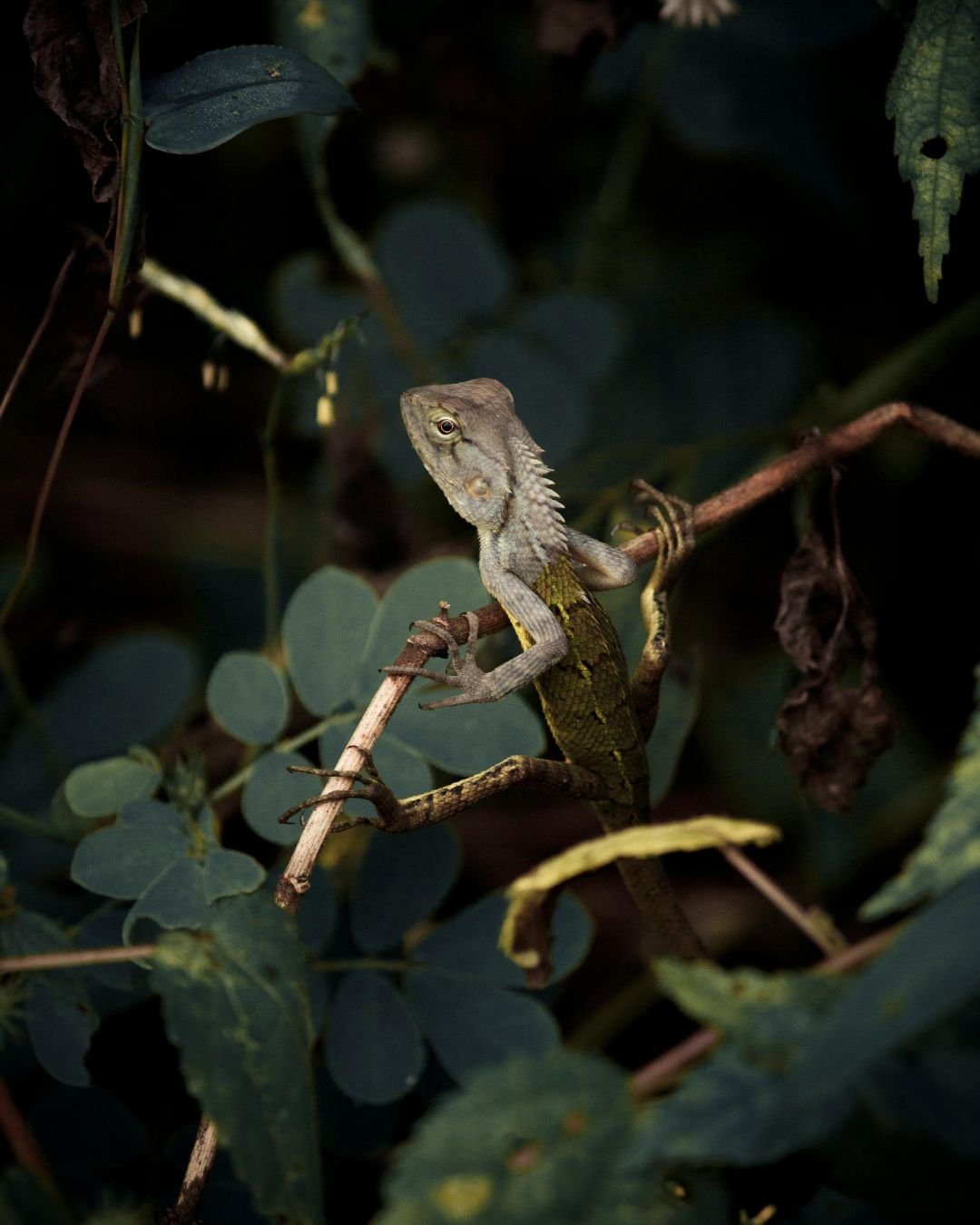
Kale has the best marketing in the reptile world. It’s dark green, nutrient-dense by human standards, and stocked at every grocery store. It’s also one of the most commonly recommended greens for bearded dragons, and that recommendation has a significant catch that gets buried in most care guides.
The catch isn’t that kale is toxic. It isn’t. The catch is that the same compounds that make kale nutritious also make it dangerous as a staple.
Kale looks like a superfood, but feed it to me daily and its goitrogens quietly wear on my thyroid. Once or twice a week, mixed with other greens, never my everyday staple. Collard does the same job without the catch.
🥬 Can Bearded Dragons Eat Kale? The Real Answer
Yes, kale is safe for bearded dragons when fed in appropriate amounts and at appropriate frequency.
The keyword is frequency. Once or twice a week as part of a varied rotation, kale is a legitimate addition to a bearded dragon’s diet. Fed daily as a staple, the goitrogen content creates a real thyroid suppression risk over time.
The “kale is great for bearded dragons” narrative is not entirely wrong. Neither is “kale is bad for bearded dragons.” Both miss the nuance. The truth is: kale is a useful rotation vegetable with a frequency ceiling that most care guides fail to communicate clearly.
📊 Kale Nutrition: Impressive Numbers With a Hidden Asterisk
Per 100g of raw kale (approximate values):
| Nutrient | Amount | Significance |
|---|---|---|
| Water | ~89g | Good moisture content |
| Sugar | ~0.99g | Very low |
| Calcium | ~150mg | High, genuinely impressive |
| Phosphorus | ~92mg | Lower than calcium, good Ca:P |
| Vitamin C | ~93mg | High antioxidant value |
| Vitamin A (beta-carotene) | ~9990 IU | Very high |
| Vitamin K | ~704mcg | Exceptionally high |
| Vitamin B6 | ~0.27mg | Moderate |
| Fiber | ~3.6g | Excellent |
| Goitrogens | Significant | The asterisk |
| Oxalates | Moderate | Secondary concern |
On paper, kale looks exceptional. High calcium, great Ca:P ratio (~1.6:1), enormous vitamin K, strong vitamin A, excellent fiber. If you’re reading those numbers without the goitrogen context, you’d make kale a daily staple immediately.
Competitive iodine uptake: Goitrogens compete with iodine for uptake into the thyroid gland.
The goitrogen content is the reason you shouldn’t.
⚠️ Goitrogens: The Thyroid Problem in Daily Kale Feeding
Goitrogens are naturally occurring compounds found in cruciferous vegetables, the plant family that includes kale, broccoli, cabbage, cauliflower, and Brussels sprouts. In bearded dragons, goitrogens interfere with thyroid function through two mechanisms:
- Competitive iodine uptake: Goitrogens compete with iodine for uptake into the thyroid gland. When iodine uptake is blocked, the thyroid cannot produce adequate amounts of thyroid hormones (T3 and T4).
- Peroxidase inhibition: Some goitrogenic compounds inhibit thyroid peroxidase, the enzyme responsible for iodine incorporation into thyroid hormone precursors.
The result over time: goiter (thyroid enlargement as the gland tries to compensate for reduced hormone production) and hypothyroidism (reduced metabolic rate, lethargy, poor growth, weight gain).
In a single meal or occasional serving, these effects are negligible. The thyroid has sufficient reserve capacity to handle intermittent goitrogen exposure without consequence. The problem is cumulative exposure. A bearded dragon eating kale daily for months is receiving persistent goitrogenic load that, particularly in the context of low dietary iodine (most commercial diets don’t specifically supplement iodine), can tip the thyroid into dysfunction.
What makes this insidious: Hypothyroidism in bearded dragons doesn’t announce itself dramatically. A slightly lethargic dragon that’s slowly gaining weight and showing less activity could be hypothyroid, and the dietary connection to daily kale feeding is frequently missed.
🔢 The Oxalate Issue on Top of Goitrogens
Kale also contains moderate oxalates, compounds that bind calcium in the digestive tract and prevent absorption.
This is the same mechanism that makes spinach problematic. Kale’s oxalate content is lower than spinach’s, but it’s meaningful enough to factor into feeding decisions.
Here’s the compounding problem: kale’s impressive calcium numbers (~150mg per 100g) are partially undermined by its own oxalate content. Some fraction of that calcium never reaches the bloodstream, it’s bound by oxalates in the gut and excreted. The actual usable calcium from kale is lower than the raw numbers suggest.
For a dragon already on a restricted calcium budget, suboptimal UVB, inconsistent supplementation, competing high-phosphorus foods, the oxalate reduction in calcium availability from kale matters.
✅ How to Feed Kale Safely
Feeding kale within safe frequency limits eliminates both goitrogen and oxalate concerns:
- Raw, thoroughly washed. No cooking required, raw kale retains full nutrient content.
- Remove thick stems. The fibrous central ribs of kale leaves are hard to digest and low in nutrition relative to the leaf itself. Tear or chop leaf portions away from the thick stem before serving.
- Chop or tear into pieces. Kale leaves can be tough and wide. Tearing into smaller pieces makes them easier to eat and digest, particularly for juveniles.
- Mix with other greens. Don’t offer kale as the sole green in the bowl. It should be one component of a three-to-four-green rotation.
- Don’t feed on the same day as other cruciferous vegetables. Broccoli, cabbage, and cauliflower are also goitrogenic. Stacking multiple goitrogenic foods in a single day compounds the thyroid effect even at low individual volumes.
🔄 Frequency Guidelines
| Age | Safe Frequency | Notes |
|---|---|---|
| Baby (0-3 months) | Avoid or once a week | Baby thyroid function is critical to growth. No reason to introduce goitrogen risk at this stage. |
| Juvenile (3-12 months) | 1-2x/week | Keep it as a rotation component, never the primary green. |
| Adult (12+ months) | 1-2x/week | This is the ceiling. Daily kale feeding is not safe long-term. |
These limits don’t require agonizing over the occasional extra serving. The concern is pattern, not a single outlier feeding. A dragon that eats kale twice a week for years, alongside varied other greens, is not at thyroid risk.
🥗 Why Collard Greens Beat Kale Without the Tradeoffs
The reason kale shouldn’t be the daily staple it’s often treated as: collard greens do everything kale does better, and without the goitrogen concern.
| Nutrient | Kale (per 100g) | Collard Greens (per 100g) |
|---|---|---|
| Calcium | ~150mg | ~232mg |
| Ca:P Ratio | ~1.6:1 | ~9:1 |
| Vitamin A | ~9990 IU | ~5019 IU |
| Vitamin C | ~93mg | ~35mg |
| Vitamin K | ~704mcg | ~437mcg |
| Goitrogens | Significant | Minimal |
| Oxalates | Moderate | Low |
Collard greens outperform kale on calcium, Ca:P ratio, and goitrogen safety. Kale wins on vitamin C and vitamin K. For a daily staple, the calcium and goitrogen comparison makes collard greens the clear choice. Kale earns its place as a rotation option that adds vitamin C and K variety, not as the foundation.
📚 Recommended Reading: Best Vegetables for Bearded Dragons, The Ranked List, the Bearded Dragon Food Chart, and the complete diet guide What Do Bearded Dragons Eat?
✅ Takeaways
- Kale is safe for bearded dragons but carries two real risks at high frequency: goitrogen-driven thyroid suppression and moderate oxalate-mediated calcium binding
- Feed kale 1-2 times per week maximum, this is a hard ceiling, not a conservative suggestion
- Never stack kale with broccoli, cabbage, or other cruciferous vegetables on the same day
- Goitrogen risk is cumulative, a single kale serving is fine; years of daily kale feeding can cause clinically significant hypothyroidism
- Remove thick stems, tear into pieces, and mix with other greens rather than offering kale as the sole green
- Collard greens outperform kale as a daily staple: higher calcium, better Ca:P ratio, and no goitrogen concern
- Kale’s genuinely impressive vitamin C and K profile makes it a valuable rotation addition at appropriate frequency, the goal is not elimination, it’s precision
Common questions
Can bearded dragons eat kale?+
Why isn't kale safe as a daily green for bearded dragons?+
Is kale or collard greens better for bearded dragons?+

Beardies World Editorial Team
Every guide on Beardies World is written and maintained by our editorial team. We are not veterinarians, and these guides are general care information, not a substitute for an exam. If your dragon seems unwell, see a reptile vet. If you spot a mistake, email info@beardiesworld.com and we will correct it.
How we write and correct our guides →