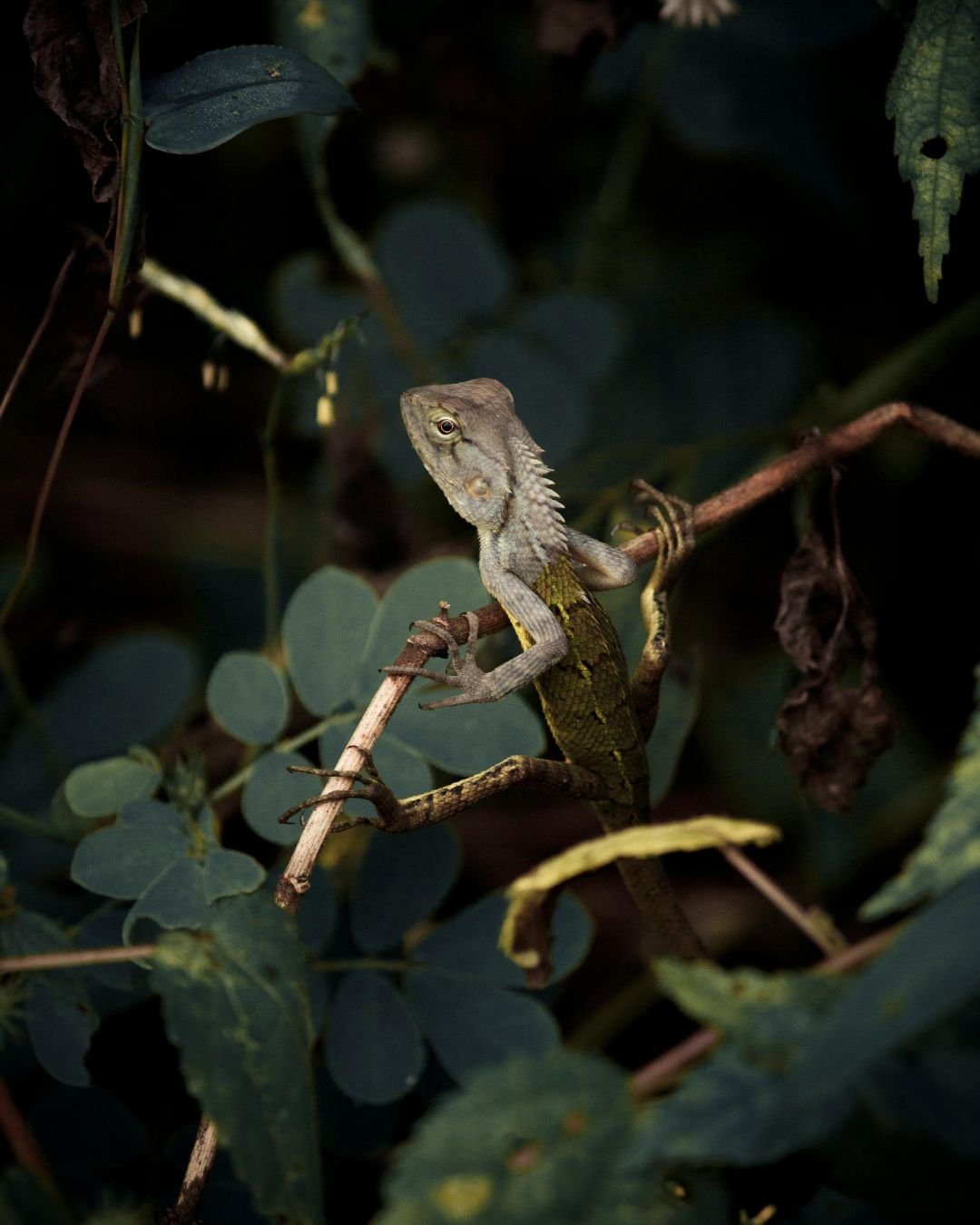
Puffing up in bearded dragons is so common that it’s easy to dismiss as nothing. But bearded dragons puff different body parts for completely different reasons, and a puffed beard means something different from a puffed body, which means something different from a puffed beard on a dragon that also can’t eat.
Here’s how to read puffing correctly by body region and context.

Puffing means nothing on its own, you have to read the body part plus the context. Beard alone in an alert adult male is mating signalling. Whole body flat under the lamp is thermoregulation. Mild all-over puff with dull skin is pre-shed. The one that matters: puffing that persists all day with no trigger, alongside lethargy and appetite loss. Behavioral puffing resolves. Illness puffing doesn't.
🫧 Why Bearded Dragons Puff Up, The Mechanics
Bearded dragons have highly flexible skin around the beard, throat, and body that can be inflated with air or repositioned through muscular and skeletal movement. This is a physiological capability that serves multiple purposes across completely different contexts.
The key diagnostic principle: always evaluate puffing in context. Where is the puffing occurring (beard, body, or both)? What is the dragon doing? What time of day? What else is happening in the environment? Context converts an ambiguous behavior into a diagnostic signal.
🧔 Puffed Beard: The Most Common Type
A puffed, distended beard, often darker than normal, is the most frequently observed inflation behavior in bearded dragons. It has several distinct causes:
Threat Display
The beard inflates and darkens when a bearded dragon perceives a threat or challenge. This is an intimidation mechanism, the inflated dark beard makes the dragon appear larger and more threatening. Common triggers:
- Unfamiliar person or animal approaching
- Another bearded dragon visible (including reflections in glass)
- Being handled before fully comfortable
- Loud sudden sounds
What it looks like: The beard darkens and inflates simultaneously. The dragon may flatten its body to appear larger, hiss, or open the mouth. Alert, direct attention toward the perceived threat.
What to do: Remove or reduce the stressor. This is a normal defensive response, not a health concern.
Mating and Dominance (Adult Males)
Adult male bearded dragons puff and darken their beards as part of territorial and sexual signaling. This behavior peaks during the period following brumation but can occur year-round.
What it looks like: Black or dark beard in an otherwise healthy, active adult male. May accompany head bobbing and arm waving. No signs of illness or stress.
What to do: Nothing. This is normal adult male behavior. If it’s happening in response to seeing other dragons through glass, cover the sides of the enclosure.
Morning Inflation Routine Many bearded dragons begin each day with a brief period of beard inflation and sometimes body puffing.
Morning Inflation Routine
Many bearded dragons begin each day with a brief period of beard inflation and sometimes body puffing. This appears to be a stretch-and-wake behavior similar to a human stretching after sleep. It typically lasts a few minutes and resolves without any intervention.
What it looks like: Short-duration puffing in the morning before the dragon becomes fully active, in a warm enclosure, without other stress signs.
What to do: Nothing. This is normal.
💪 Puffed Body: When the Whole Dragon Inflates
Full-body inflation, where the entire torso appears to puff out, making the dragon look bloated or wider than normal, has different causes than isolated beard puffing.
Thermoregulation (Basking Behavior)
Bearded dragons flatten and slightly inflate their bodies while basking to maximize the surface area exposed to heat. The body broadens to absorb more infrared radiation efficiently.
What it looks like: The body appears wider and slightly flatter while the dragon is under the basking light. The dragon is relaxed, eyes partially closed, in a classic basking posture.
What to do: Nothing. This is correct thermoregulation behavior.
Pre-Shed Inflation
In the days before a significant shed, bearded dragons puff their bodies to help create separation between the old and new skin layers. The inflation creates a small gap that facilitates the shed.
What it looks like: Generalized mild puffiness, dull skin tone, possibly increased hiding. Usually persists for a few days before the shed begins.
What to do: Increase bathing frequency to 20-minute lukewarm sessions every 2-3 days to support the shed.
Response to Perceived Threat
Full-body inflation combined with a flattened posture is a classic threat-response behavior. The dragon makes itself appear larger and more imposing. Usually combined with a darkened beard and open-mouth posture.
What it looks like: Full body flattening and widening, dark beard, open mouth, and hissing. Clearly directed at a specific perceived threat.
🔄 Puffing During Shedding
As covered above, puffing is a normal part of the pre-shed process. The puffing during shedding serves a mechanical purpose, creating the tension gap between skin layers that initiates separation.
Bearded dragons may also appear puffed around the head and face during facial shed specifically as the skin lifts and separates. This can look alarming if the owner hasn’t seen it before. It resolves as the shed completes.
🤒 Puffing as a Symptom of Illness
This is the context where puffing becomes medically relevant. A bearded dragon that is puffed up, lethargic, dark in color, off food, and not responding normally to its environment is not displaying behavioral puffing. It’s showing a systemic illness sign.
Signs illness may be the cause:
- Puffing persists throughout the day without resolution
- Combined with lethargy, reduced or absent appetite
- Dark overall coloring in a properly warm enclosure
- Eyes appear dull, sunken, or partially closed
- Any discharge from eyes, nose, or mouth
- No obvious environmental trigger (no stressor, not pre-shed, not morning routine)
Respiratory infections specifically can cause a dragon to appear puffed around the throat as it works harder to breathe. Listen for any audible breathing sounds, wheezing, clicking, or rattling, in combination with puffing is a significant finding requiring veterinary attention.
Here’s where things change: behavioral puffing resolves. Illness puffing persists and worsens. If puffing is constant, combined with other symptoms, and doesn’t follow any behavioral context, it’s a symptom, not a behavior.
🛁 Puffing During Baths
Bearded dragons sometimes puff up during baths, inflating their bodies to float more easily or as a mild stress response to water contact if they aren’t accustomed to bathing.
Bath-puffing in a dragon that eats normally and is otherwise healthy is benign. Continue gentle baths at appropriate frequency to acclimate the dragon. Most bath-averse dragons improve with consistent, positive short sessions.
📋 Quick-Reference Guide: Puffing by Context
| Context | Body Part | Other Signs | Meaning | Action |
|---|---|---|---|---|
| While basking | Whole body, flattened | Relaxed, eyes soft | Thermoregulation | None |
| Morning wake-up | Beard or whole body | Brief, resolves quickly | Normal stretch behavior | None |
| Seeing other dragon/reflection | Beard (dark) | Alert, directed | Threat display | Cover enclosure sides |
| Being handled | Beard (dark), open mouth | Defensive posture | Stress response | Return to enclosure |
| Adult male, unprovoked | Beard (dark/black) | Head bobbing | Mating/dominance | None |
| Pre-shed | Whole body, mild | Dull skin | Shed preparation | Increase bath frequency |
| During bath | Body | May be brief | Acclimation or mild stress | Continue bathing gently |
| Persistent, with lethargy | Any or all | Off food, dull, dark | Illness | Vet visit |
| With audible breathing | Throat/body | Wheezing sounds | Respiratory infection | Urgent vet visit |
🚨 When Puffing Requires a Vet Visit
Schedule a vet appointment if:
- Puffing is persistent (more than a full day) without an identifiable behavioral or environmental cause
- Puffing is combined with lethargy, appetite loss, and dark coloring
- Any audible breathing sounds accompany puffing
- The dragon appears to struggle to breathe normally
- Puffing is around the abdomen and the dragon is a female of breeding age (possible egg binding)
- Visible swelling or asymmetry in any body region
📚 Recommended Reading: Why Is My Bearded Dragon Turning Black? 8 Causes Ranked From Most to Least Urgent.
✅ Takeaways
- Puffing is a normal behavior in most contexts; threat display, thermoregulation, morning routine, pre-shed, and bath acclimation are all benign causes
- A puffed black beard in an active adult male is normal mating and dominance signaling
- Pre-shed body puffing helps create separation between old and new skin layers; support it with increased bath frequency
- Illness-related puffing is persistent, context-free, and combined with lethargy, appetite loss, and dull coloring
- Audible breathing sounds with puffing = respiratory infection until proven otherwise; see a vet
- The diagnostic rule: behavioral puffing resolves; illness puffing persists and is accompanied by other symptoms
- Evaluate location (beard vs. body), context (basking vs. resting vs. responding to stimulus), and accompanying signs before drawing any conclusion
Common questions
Why is my bearded dragon puffing up?+
When is a puffed-up bearded dragon a sign of illness?+
Should I worry if my bearded dragon puffs up and makes noise when breathing?+

Beardies World Editorial Team
Every guide on Beardies World is written and maintained by our editorial team. We are not veterinarians, and these guides are general care information, not a substitute for an exam. If your dragon seems unwell, see a reptile vet. If you spot a mistake, email info@beardiesworld.com and we will correct it.
How we write and correct our guides →