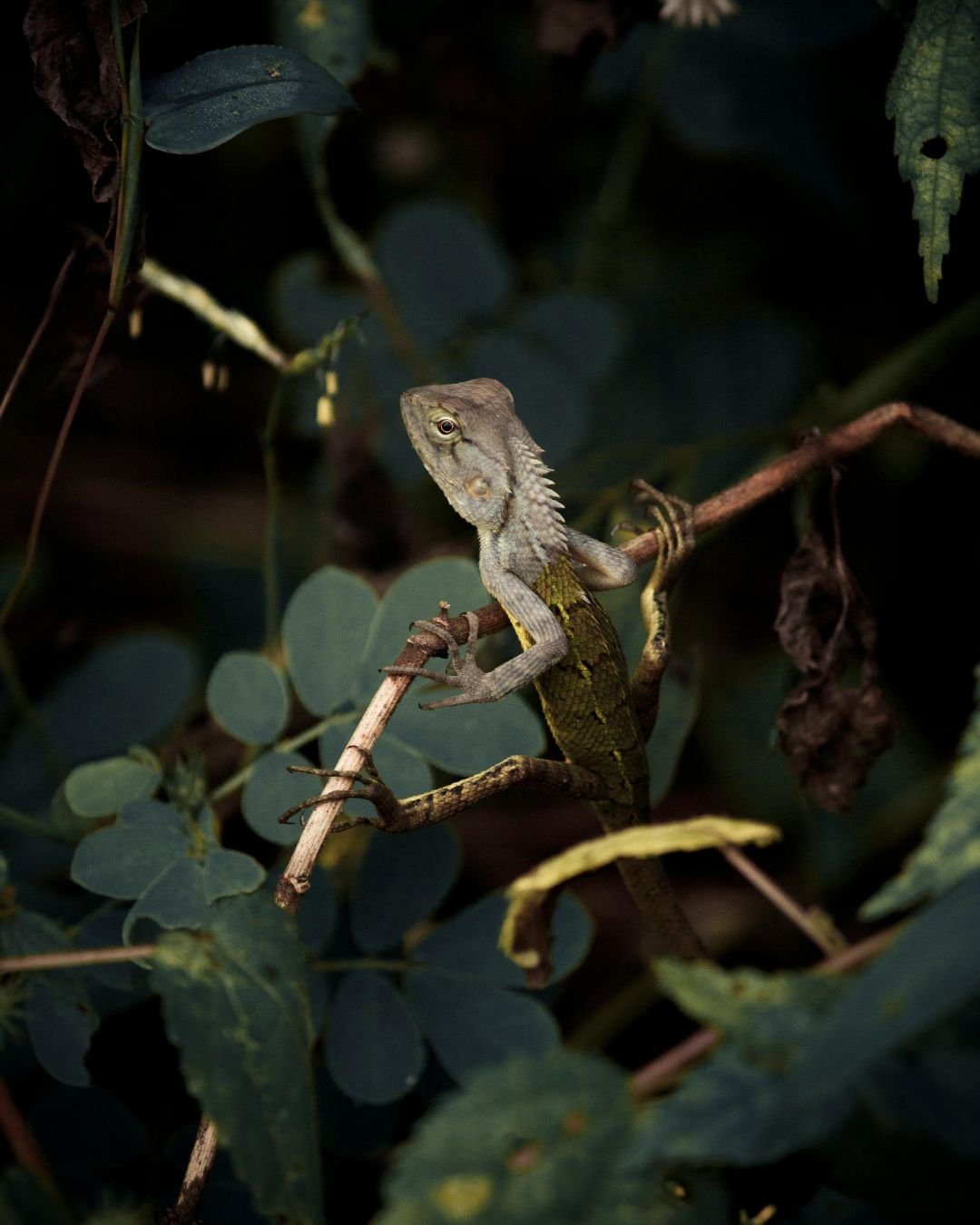
Glass surfing looks almost comical the first time you see it, your bearded dragon standing up on its hind legs, scratching and clawing repeatedly at the front glass panel. Watch it happen for a week straight and it stops being funny. It’s one of the most persistent and misunderstood behavioral problems in bearded dragon care.
Most guides tell you what glass surfing is. This one tells you why each specific cause produces it, and what the actual fix is for each one.

Nine causes, but start with one: your dragon is almost certainly fighting its own reflection. Black contact paper on the outside of every glass panel resolves the majority of glass surfing cases, costs a few dollars, and takes ten minutes. Work down the checklist only after you've ruled that out.
🦎 What Is Glass Surfing?
Glass surfing (also called glass dancing) is repetitive locomotion against the enclosure glass, typically the front panel, where the dragon stands upright, scratches at the surface, and may run back and forth along the glass repeatedly.
It’s a displacement behavior: the dragon is attempting to move through or past an obstacle it can’t bypass. The behavior itself is the symptom. The cause is whatever is producing the compulsion to move past that obstacle.
Understanding the cause is the only way to stop it. Covering the glass temporarily doesn’t resolve anything, it just temporarily removes the surface the behavior is directed at.
🔍 9 Causes of Glass Surfing, With Specific Fixes
Cause 1: Seeing Its Own Reflection
The single most common cause of glass surfing, and the most frequently overlooked. A bearded dragon sees its reflection in the glass and perceives a rival. It can’t reach the “intruder”, so it repeatedly attempts to get past the glass toward the perceived threat.
How to confirm: Does the surfing increase when room lighting changes (making the reflection more visible)? Does it focus specifically on areas where the reflection is clearest?
Fix: Apply solid black or dark contact paper to the exterior of all glass panels. This eliminates the reflection without affecting the dragon’s ability to see out when needed. This is the fix that resolves glass surfing in the majority of cases.
Cause 2: Incorrect Temperatures
A bearded dragon that can’t reach its required basking temperature is driven to seek heat, and will pace the enclosure persistently looking for a warmer area. If that drive exceeds what the enclosure provides, it manifests as glass surfing.
How to confirm: Check the basking surface temperature with an infrared thermometer. If it’s below 100°F, temperature is the cause or a contributing factor.
Fix: Raise the basking spot temperature to 100-110°F. Verify the cool side is also within range (80-85°F) so the dragon has a full thermal gradient to work with.
Cause 3: Hunger
A dragon that isn’t being fed frequently or sufficiently enough will roam the enclosure searching for food. This is particularly common in:
Ensure fresh greens are available throughout the morning for adults.
- Babies and juveniles not being fed three times daily
- Adults that have been recently switched from daily to less frequent insect feeding without the dietary transition being managed well
- Dragons that have exhausted their greens and have nothing left in the bowl
How to confirm: Does the glass surfing occur primarily in the morning before feeding? Does it decrease after a meal?
Fix: Review the age-appropriate feeding schedule. Ensure fresh greens are available throughout the morning for adults. Don’t abruptly cut insect frequency without a managed transition.
Cause 4: New Environment or Recent Change
A bearded dragon in a new home, new enclosure, or recently rearranged setup has lost its familiar territorial landmarks. Glass surfing during the first 2-4 weeks in a new environment is an orientation behavior, the dragon is mapping the space.
How to confirm: Did the behavior begin shortly after a move, enclosure upgrade, or significant rearrangement?
Fix: Time and consistency. Keep the environment stable. Minimize handling during the acclimation period. Most orientation-driven glass surfing resolves within 2-4 weeks as the dragon establishes familiarity.
Cause 5: Enclosure Too Small
A bearded dragon in an undersized enclosure can’t establish adequate territory, behavioral range, or proper thermal gradient. The glass surfing is an expression of the drive to move that exceeds the available space.
How to confirm: What size is the enclosure? Adult bearded dragons (18+ months) need a minimum 120-gallon (4x2x2 feet) space. Persistent glass surfing in a dragon that’s outgrown its enclosure is a reliable indicator.
Fix: Upgrade the enclosure. This is not a behavioral fix, it’s a space fix. No amount of environmental enrichment compensates for genuinely inadequate space.
Cause 6: Seeing Another Animal (or Another Bearded Dragon)
Any animal visible from the enclosure, a cat, dog, another reptile, or another bearded dragon, creates threat-driven arousal that produces glass surfing. The dragon is trying to respond to the perceived intruder or competitor and can’t reach them.
How to confirm: Does the surfing increase when the other animal is nearby or visible? Is the other animal’s tank visible from the dragon’s enclosure?
Fix: Reposition enclosures so no animal has visual access to another. Block line-of-sight with furniture, covers, or enclosure repositioning.
Cause 7: Reproductive Drive (Gravid Females)
Female bearded dragons that are gravid (carrying eggs, whether or not mated) become intensely driven to find a suitable laying site. This manifests as persistent glass surfing, digging behavior, and restlessness that can last for weeks.
How to confirm: Is the dragon a female, 12+ months old, with a notably rounder abdomen? Is digging behavior accompanying the glass surfing?
Fix: Provide a lay box immediately, a container large enough for the dragon to turn around in, filled 6-8 inches deep with moistened eco-earth or a 50/50 sand-soil mix. A gravid female that cannot find a laying site will continue glass surfing until she does, or develops potentially fatal egg binding.
Cause 8: Mating Season Drive (Males)
Male bearded dragons in their post-brumation mating drive period become restless, territorial, and prone to glass surfing as they instinctively seek females and territory. This is hormonally driven and seasonally peaks.
How to confirm: Adult male dragon, spring/early summer timing, accompanied by persistent black bearding and head bobbing.
Fix: Increased handling and out-of-enclosure time during this period can help redirect the energy. The behavior typically diminishes as the seasonal drive subsides.
Cause 9: Boredom and Insufficient Enrichment
Bearded dragons are more cognitively active than most reptile owners expect. A dragon in a bare enclosure with no variation in terrain, hides, or sensory input will glass surf partly from under-stimulation.
How to confirm: This is usually a contributing factor rather than a sole cause. A bare enclosure with no hides, no climbing surfaces, and no environmental variation is a red flag.
Fix: Add environmental complexity, different hide levels, climbing structures, varied substrate textures, and periodic rearrangement to provide novel stimulation. Supervised out-of-enclosure exploration time also helps.
📋 Diagnosis Checklist: Finding Your Specific Cause
Work through these in order, reflection is the most common, so start there:
- ☐ Black background paper applied to all glass panels? (Eliminates reflection)
- ☐ Basking surface confirmed at 100-110°F with infrared thermometer?
- ☐ Feeding schedule appropriate for age?
- ☐ Enclosure minimum 4x2x2 for adult dragons?
- ☐ No other animals with visual access to the enclosure?
- ☐ Female? If yes, is a lay box available?
- ☐ Did the behavior start after a recent environmental change?
- ☐ Is enclosure enrichment adequate (multiple hides, climbing options)?
If you work through all of these and the behavior persists, a vet visit to rule out internal drivers (parasitic infection, illness-related restlessness) is the next step.
📚 Recommended Reading: Bearded Dragon Stress Marks: What They Look Like, What Causes Them, and How to Make Them Go Away.
⚠️ When Glass Surfing Becomes a Physical Problem
Persistent glass surfing has physical consequences when it continues unaddressed:
- Snout abrasion: Repeated contact with glass edges causes snout scraping that can develop into open wounds and potential mouth rot
- Nail damage: Constant scratching at glass wears and damages nails
- Exhaustion and weight loss: Sustained repetitive activity burns calories and prevents adequate rest
- Chronic stress: The stress response driving glass surfing suppresses immune function over time
If the snout shows any abrasion, redness, or open skin from glass contact, address the cause immediately and apply appropriate wound care.
✅ Takeaways
- Glass surfing is always caused by something, it’s a symptom, not a personality trait
- Reflection in the glass is the most common cause and the first thing to eliminate, black background paper on all panels
- Temperature, hunger, enclosure size, visible animals, and reproductive drive are the other primary causes, each has a specific fix
- Gravid females glass surfing urgently need a lay box, egg binding is a life-threatening consequence of not providing one
- Work through the diagnostic checklist systematically before assuming the cause
- Persistent glass surfing causes physical snout and nail damage, it’s not a behavior to wait out
Common questions
Why is my bearded dragon glass surfing?+
How do I stop my bearded dragon from glass surfing?+
Is glass surfing harmful to bearded dragons?+

Beardies World Editorial Team
Every guide on Beardies World is written and maintained by our editorial team. We are not veterinarians, and these guides are general care information, not a substitute for an exam. If your dragon seems unwell, see a reptile vet. If you spot a mistake, email info@beardiesworld.com and we will correct it.
How we write and correct our guides →