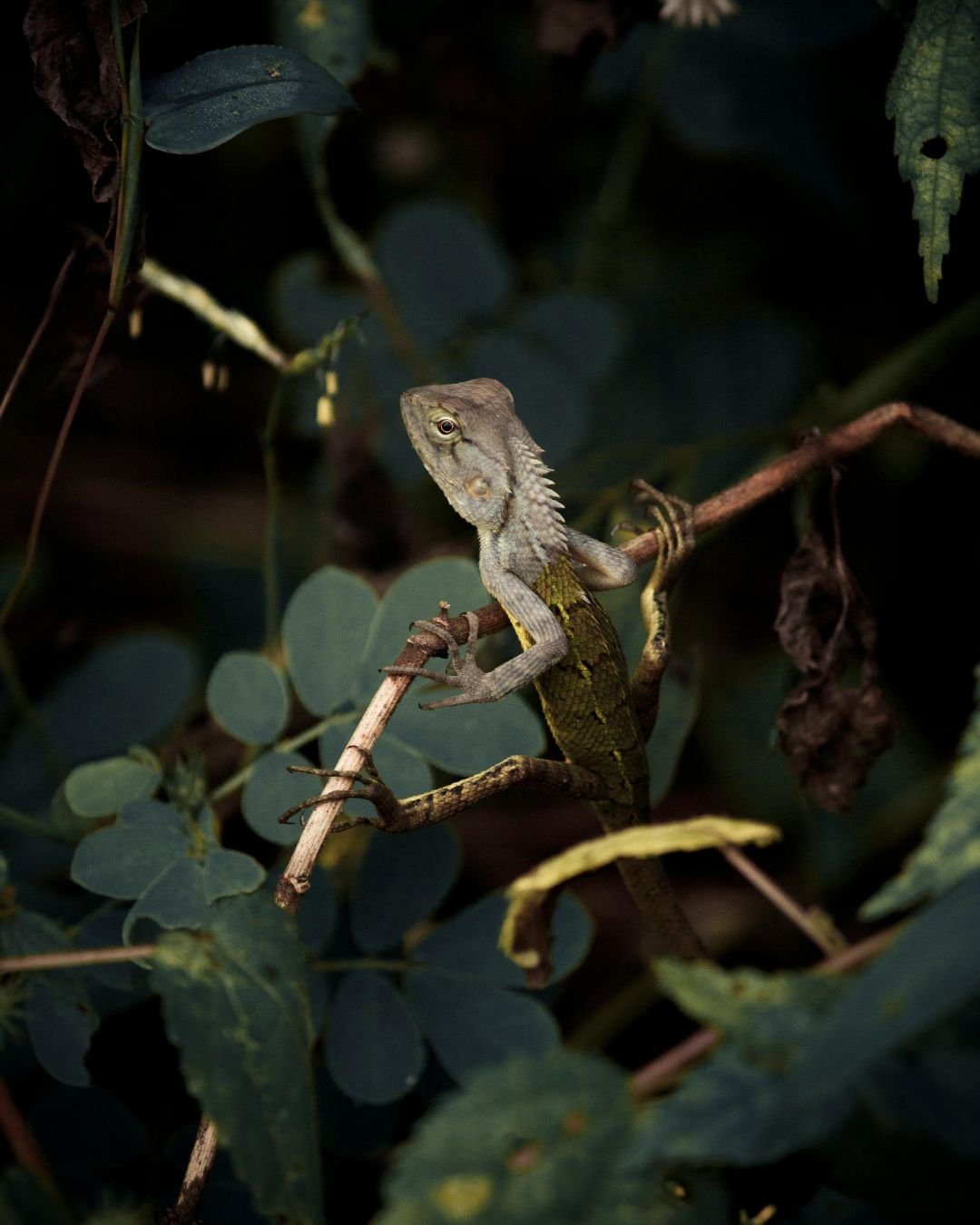
Impaction is one of the bearded dragon conditions where the difference between a manageable problem and a life-threatening one is measured in hours, not days. The warning signs are specific. The escalation is fast. And many owners mistake early impaction for simple constipation until the hind legs stop working.
Here’s what impaction actually is, how to identify it early, and what needs to happen when you do.

The line between "try a warm bath" and "emergency vet, now" is one specific sign: the hind legs. If the rear limbs start to drag, tremble, or can't hold the dragon up, the blockage is pressing on the spinal cord. That is a same-day visit, not a wait-and-see, permanent nerve damage is measured in hours.
🚧 What Is Impaction in Bearded Dragons?
Impaction is the partial or complete physical blockage of the digestive tract by material the dragon cannot pass. Unlike constipation, where dry, sluggish stool moves slowly through a functioning gut, impaction involves a physical mass that is not moving at all.
The blockage creates increasing pressure in the intestinal tract. As it grows, it begins pressing on surrounding structures, including, critically, the lumbar spinal cord. This is why impaction’s most alarming symptom is hind limb weakness: the blockage is physically compressing the nerves that control the rear legs.
Impaction does not resolve on its own. It escalates. A partial impaction becomes a complete blockage. A complete blockage leads to spinal compression, organ failure, and death without intervention.
🔍 Signs of Impaction: The Progression You Need to Know
Early Signs (Often Missed)
- No defecation for longer than the dragon’s established normal pattern (adults: typically >10-14 days outside brumation)
- Reduced appetite with no clear environmental cause
- Slight lethargy, less active than usual
- Abdomen that appears slightly full or firm when gently palpated
- Straining posture during attempted defecation, legs splayed, tail raised, no result
Progressing Signs
- Visible abdominal distension, the belly appears bloated, especially in the lower half
- Straining more frequently and visibly
- Appetite loss becoming complete
- Restlessness, the dragon may shift positions frequently, unable to settle
- Posture changes, arching the back or holding the body in an unusual position
Critical Signs, Act Immediately
- Hind limb weakness, the rear legs begin to drag, tremble, or fail to support the dragon’s weight. This is spinal cord compression from the blockage pressing against lumbar nerves. It is a same-day veterinary emergency without exception.
- Paralysis of rear limbs, complete inability to move the hind legs
- Extreme lethargy, the dragon is difficult to rouse and shows minimal response
- Visibly hard, distended lower abdomen
Hind limb involvement means the blockage has reached a size where spinal cord compression is occurring. Permanent neurological damage is possible if this is not addressed within hours.
⚠️ What Causes Impaction?
Loose Particulate Substrate, The Primary Cause
Sand, calcium sand, walnut shell, loose soil, crushed coral, and similar fine-particle substrates are the leading cause of impaction in bearded dragons. Dragons ingest substrate accidentally while targeting prey, licking the enclosure floor, and exploring with the tongue.
Even small consistent amounts accumulate. A buildup of sand over weeks or months forms a compacted mass in the colon that the gut cannot move.
This is why the reptile community’s position on loose substrate is clear for babies: paper towels or reptile carpet until at least 12-18 months. No loose particles. Adults can tolerate some substrate options better, but the risk never reaches zero.
Prey Items Too Large
A feeder insect or prey item that exceeds the safe size threshold (eye-to-eye head width) can lodge in the digestive tract. Hard-bodied insects, particularly mealworms and superworms with high chitin content, present higher impaction risk than soft-bodied feeders.
Hair and Foreign Material
Free-roaming bearded dragons can ingest carpet fibers, hair, and small debris. All present impaction risk if ingested in quantity.
Dehydration
A chronically dehydrated dragon produces increasingly dry, compact intestinal contents. Severe dehydration can produce stool so desiccated it forms a hard mass that can no longer pass.
Any hind limb weakness changes this from “monitor and try home interventions” to “same-day emergency.
Severe Constipation Left Untreated
Prolonged constipation, if left without intervention, can transition to true impaction as the stool dries and compacts further within the colon.
🆚 Impaction vs. Constipation: The Critical Difference
| Feature | Constipation | Impaction |
|---|---|---|
| Gut function | Slowed but intact | Physically blocked |
| Defecation | Infrequent, difficult | Absent, straining without result |
| Abdomen | Soft, normal shape | Firm, distended |
| Appetite | Reduced | Absent |
| Hind limbs | Normal | Weakness or failure = EMERGENCY |
| Response to warm baths | Often produces stool within days | Does not produce stool |
| Home management | Appropriate as first step | Vet required |
The dividing line in clinical urgency: hind limb involvement. Any hind limb weakness changes this from “monitor and try home interventions” to “same-day emergency.”
✅ Home First Response, and Its Strict Limits
For a dragon showing early signs without hind limb involvement:
1. Daily warm baths (20-30 minutes, 95-100°F)
The warmth stimulates gut motility and provides hydration. Gentle abdominal massage during the bath, slow, light strokes from mid-abdomen toward the vent, can help move early-stage blockages. Do this for 3-5 days consistently.
2. Single drop of olive oil
Offered on the tip of the nose for the dragon to lick off, once, not repeatedly. Provides lubrication that may help early-stage stool pass.
3. Light abdominal massage on a warm surface
With the dragon on a warm, flat surface, use two fingers to apply very gentle pressure from mid-abdomen toward the vent in slow strokes. Never apply firm pressure. 2-3 minutes, once daily.
4. Remove the suspected substrate immediately
If loose substrate is in the enclosure, remove it completely and replace with paper towels regardless of whether impaction is confirmed. This stops the accumulation of new material and is a required step regardless of other interventions.
The strict limits of home management:
- If no stool appears after 5-7 days of daily baths
- If hind limb weakness develops at any point
- If abdominal firmness increases
- If the dragon deteriorates in any way
Stop home management and go to the vet. Home management is appropriate for early-stage, soft-abdomen, normal-limb-function situations only.
🩺 Veterinary Diagnosis and Treatment
Diagnosis:
- Physical palpation, a vet can often feel an impaction mass in the colon
- Radiography (X-ray), visualizes the location, size, and density of the blockage; identifies whether bone or gravel-type substrate is involved
- Ultrasound, useful for soft-tissue blockages that don’t show clearly on X-ray
Treatment options by severity:
Mild impaction: Warm fluid enema administered by the vet, hydration therapy, and supervised observation. Many mild impactions resolve with professional enema and supportive care.
Moderate impaction: Repeated enemas, injectable fluids, medications to stimulate gut motility (lactulose, metoclopramide under vet guidance), and extended supportive care.
Severe impaction: Surgical intervention, enterotomy (opening the intestine to manually remove the blockage). This carries surgical risk but is the only option when the blockage cannot be moved through the tract.
Post-treatment: Full substrate change, dietary review, hydration protocol, follow-up imaging to confirm resolution.
🛡️ Prevention: Substrate, Prey Size, and Diet
Substrate:
- Babies (0-18 months): paper towels, newspaper, reptile carpet, ceramic tile only
- Adults: tile, shelf liner, or reptile carpet; if using a bioactive setup with naturalistic substrate, ensure the particle size is too large to be accidentally ingested
- Never: fine sand, calcium sand, walnut shell, crushed coral, loose coco coir without appropriate particle size
Prey size:
- The eye-to-eye rule, every single feeding: no prey wider than the space between the dragon’s eyes
- Prioritize soft-bodied feeders (dubias, BSFL, silkworms) over high-chitin feeders (mealworms, superworms)
- Never leave large live feeders unattended in the enclosure overnight
Diet and hydration:
- Daily greens for fiber
- High-moisture feeders (hornworms) regularly
- Twice-weekly baths as a baseline hydration habit
- Correct basking temperature, a warm gut moves contents; a cold gut doesn’t
📚 Recommended Reading: Bearded Dragon Not Pooping: How Long Is Too Long and What to Do About It.
🚨 Emergency Indicators
Go to an emergency reptile vet immediately, do not wait for a scheduled appointment, if:
- Any hind limb weakness, dragging, or paralysis
- Visible straining without result for more than 24 hours with abdominal distension
- The dragon is unresponsive or collapsed
- Rapid deterioration over a matter of hours
✅ Takeaways
- Impaction is a physical blockage of the digestive tract, it does not resolve on its own and escalates to spinal cord compression if untreated
- Hind limb weakness is a same-day emergency, spinal cord compression from the blockage can cause permanent paralysis
- Loose particulate substrate is the primary cause; paper towels or reptile carpet for babies is non-negotiable
- Early signs (no stool, reduced appetite, slight abdominal firmness without hind limb involvement) can be managed with daily warm baths and abdominal massage for 3-5 days
- Home management has strict limits, if no improvement within 5-7 days or any limb weakness develops, stop and see a vet
- Veterinary treatment ranges from enema and fluid therapy for mild cases to surgical enterotomy for severe blockage
- Prevention is straightforward: appropriate substrate, correctly sized prey, daily greens, and consistent hydration
Common questions
What is the difference between impaction and constipation in bearded dragons?+
What causes impaction in bearded dragons?+
Can bearded dragon impaction be treated at home?+

Beardies World Editorial Team
Every guide on Beardies World is written and maintained by our editorial team. We are not veterinarians, and these guides are general care information, not a substitute for an exam. If your dragon seems unwell, see a reptile vet. If you spot a mistake, email info@beardiesworld.com and we will correct it.
How we write and correct our guides →