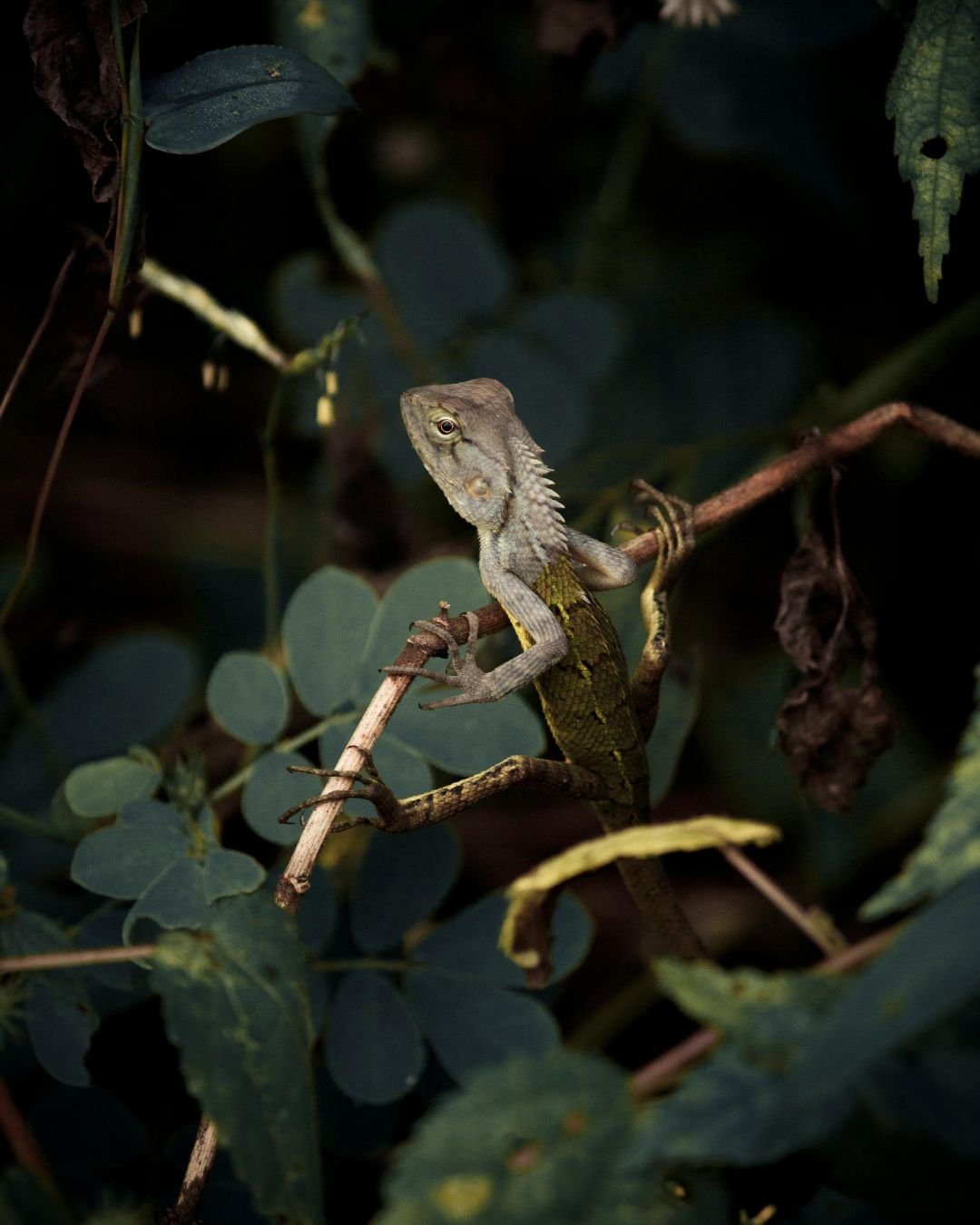
Most baby bearded dragons (Pogona vitticeps) don’t fail because their owners don’t care. They fail because the first 90 days are more demanding than anyone warned the owner about, and by the time the signs appear, weeks of preventable damage have already been done.
Baby bearded dragons have narrow tolerance windows for temperature, nutrition, and handling. Get those right, and you’ll watch one of the most rewarding animals in the hobby grow visibly week by week. Get them wrong, and you’ll be at a vet’s office trying to reverse metabolic bone disease in a dragon that’s four months old.
Here’s what the first year actually requires.

Only give me insects no bigger than the gap between my eyes. Anything larger is a hazard, not a bigger meal.
🐣 Baby Bearded Dragon Basics: What You’re Working With
A baby bearded dragon is defined as a dragon from hatch through approximately 3 months of age. In those first three months, it will roughly double in length and require more intensive daily care than at any other point in its life.
Key facts about baby bearded dragon biology:
- Hatch weight: 4-6 grams. By 3 months: 50-100+ grams in a healthy individual
- Hatch length: 8-10cm (3-4 inches). By 3 months: 20-30cm (8-12 inches)
- Metabolic rate is extremely high, they burn through nutrients rapidly
- Temperature sensitivity is greater than adults, small deviations suppress feeding and digestion
- Immune systems are not fully developed, stress and pathogen exposure have amplified consequences
What that means practically: every decision you make in the first 90 days, temperatures, feeding frequency, supplement consistency, handling protocol, has a compounding effect that shapes the dragon’s long-term health trajectory.
🌡️ Temperature and Lighting: The Foundation Everything Else Depends On
No other aspect of baby bearded dragon care carries more weight than getting temperatures right. Bearded dragons are ectotherms, every metabolic process, including digestion, immune function, and nutrient absorption, is temperature-dependent.
Required temperature zones
| Zone | Temperature |
|---|---|
| Basking spot surface | 100-110°F (38-43°C) |
| Cool side ambient | 80-85°F (27-29°C) |
| Nighttime minimum | 65-70°F (18-21°C) |
How to measure correctly
Use an infrared temperature gun (laser thermometer) to measure the actual basking surface, not the air above it. Stick-on adhesive thermometers measure ambient air, not surface temperature, and consistently read 10-15°F lower than actual surface temperatures at the basking spot.
UVB lighting
A T5 HO UVB bulb (10.0 or 12% for arid species setups) is mandatory for baby bearded dragons. UVB drives vitamin D3 synthesis, which drives calcium absorption. Without adequate UVB, calcium supplementation alone cannot prevent metabolic bone disease.
- Position the T5 HO bulb 10-12 inches from the basking area
- Run UVB 10-12 hours per day on a timer
- Replace the bulb every 6 months, UVB output degrades before visible light fails
- Glass and plastic block UVB entirely, the bulb must have line-of-sight access to the dragon
Lighting schedule
12-14 hours of light per day (matching a long summer photoperiod) supports active metabolism and feeding drive in babies.
🍽️ Feeding a Baby Bearded Dragon: Schedule, Quantity, and Food Choices
Baby bearded dragons need to eat more frequently than at any other life stage. Three feeding sessions per day is the correct schedule for the first three months.
Insect feeding (75-80% of diet)
- 3 times daily
- Offer as many appropriately sized insects as the baby will eat in 10-15 minutes per session
- Remove all uneaten insects immediately, loose crickets bite sleeping babies
- Critical size rule: Never feed insects larger than the space between the baby’s eyes. Oversized prey causes spinal compression and impaction.
Best feeder insects for baby bearded dragons
- Small dubia roach nymphs (best protein and Ca:P ratio)
- 1/4-inch (pinhead) crickets for hatchlings; 3/8-inch as they grow
- Small black soldier fly larvae (naturally calcium-rich)
Greens (20-25% of diet)
- Offer fresh greens every single day, even if ignored
- Best choices: finely chopped collard greens, mustard greens, dandelion greens
- Consistent early exposure is what prevents picky eating from developing as an adult
What healthy feeding looks like
Active, alert baby pursuing insects within seconds of them being placed. A baby that’s lethargic, ignoring moving insects, or eating very few per session is signaling a problem, usually temperature, illness, or incorrect prey size.
💊 Supplements: Non-Negotiable From Day One Baby bearded dragons have the highest calcium demand of any life stage.
📚 Recommended Reading: How Many Crickets to Feed a Baby Bearded Dragon
💊 Supplements: Non-Negotiable From Day One
Baby bearded dragons have the highest calcium demand of any life stage. Supplementation isn’t a backup for a good diet, it’s a required component of the nutritional system.
Every single feeding session
Calcium without D3 (if UVB lighting is adequate). Dust insects by placing them in a small bag with a pinch of calcium powder and shaking gently.
Twice per week
Replace one calcium-without-D3 session with a reptile multivitamin. This covers vitamin A, B-complex, and trace minerals.
If UVB is suboptimal
Use calcium with D3 instead of calcium without D3, 2-3 times per week. D3 is fat-soluble and accumulates, don’t use it at every feeding.
Gutloading
Every feeder insect must have eaten nutritious food (dark leafy greens, squash, commercial gutload formula) for 24-48 hours before being fed to the baby. This single step can double or triple the nutritional value of the feeder.
🏠 Enclosure Setup for Baby Bearded Dragons
Enclosure size
A 20-gallon enclosure (30″ x 12″ x 12″) works for the first 3-4 months. Many owners go directly to a 40-gallon breeder, which works throughout the first year and beyond.
Substrate
Paper towels or reptile carpet for babies, zero impaction risk during the high-risk growth phase. Loose particulate substrates (sand, soil) should be avoided until at least 12-16 months. Babies accidentally ingest substrate while hunting, and even small amounts can cause life-threatening impaction.
Hides and decor
One hide on the cool side. Minimal decor to reduce hunting obstacles. Babies benefit from a less cluttered space where they can find insects efficiently.
Water dish
Shallow dish with fresh water available at all times. Many babies don’t drink from standing water, supplement hydration through high-moisture feeders (hornworms) and twice-weekly 10-minute lukewarm baths.
Location
Avoid placement near televisions, speakers, or high-foot-traffic areas. Baby bearded dragons are more easily stressed than adults, and chronic stress directly suppresses feeding drive and immune function.
🤲 Handling: How Much Is Too Much Early On
This is where new owners most commonly damage the trust relationship with a baby dragon before it’s established.
First week
No handling. Allow the baby to acclimate to its new environment, find the basking spot, and begin eating before any handling begins.
Weeks 2-4
Short handling sessions of 5-10 minutes, once per day maximum. Low to the ground, supported fully, in a warm room.
Month 2 onward
Gradually extend handling as the dragon demonstrates consistent feeding and non-stressed behavior. 15-20 minutes per session, once or twice daily, is appropriate for a well-adjusted baby.
Signs a baby is stressed during handling
- Dark beard or body coloring
- Attempting to flee persistently
- Puffing up
- Hissing
If you see these signs, return the dragon to its enclosure. Don’t push through stress responses, they compound and slow taming progress rather than accelerating it.
Here’s where things change: a baby that eats well, basks confidently, and explores its enclosure is a baby ready for more handling. A baby that’s still nervous at meals isn’t ready. Let feeding behavior be your guide, not the calendar.
📈 Growth Milestones: What Healthy Development Looks Like
Measuring your baby weekly is the most reliable way to catch problems early.
| Age | Expected Length (SVL + tail) | Expected Weight |
|---|---|---|
| Hatch | 8-10cm (3-4 in) | 4-6g |
| 1 month | 15-20cm (6-8 in) | 20-40g |
| 2 months | 20-28cm (8-11 in) | 40-80g |
| 3 months | 28-35cm (11-14 in) | 80-120g |
These are ranges, not absolutes. Genetics play a significant role. But a baby showing no growth over two consecutive weeks, or losing weight, requires prompt investigation.
Track snout-to-vent length (SVL) separately from total length. Tail regeneration and natural variation in tail length can distort total measurements. SVL is the more reliable growth indicator.
🚨 Warning Signs Every Baby Dragon Owner Must Recognize
Act immediately if you see:
- Hind limb weakness, trembling, or inability to use back legs, spinal compression from oversized prey or early MBD
- Mucus from the nose or mouth, respiratory infection
- Eyes sunken or won’t open, dehydration or infection
- No eating for more than 3 days without obvious environmental cause
- Soft jaw or limb bones, metabolic bone disease in active progression
- Black coloring that doesn’t resolve after warming, chronic stress or serious illness
- Bloated abdomen, impaction or parasitic infection
None of these symptoms are “wait and see” situations for a baby bearded dragon. Their small body mass means health declines faster than in adults. A vet visit within 24-48 hours is appropriate for any of the above.
📚 Recommended Reading: Why Is My Bearded Dragon Not Eating?
✅ Takeaways
- The first 90 days are the most critical window in a bearded dragon’s life, temperature, nutrition, and supplement consistency during this period shape long-term health
- Basking surface must reach 100-110°F; measure with an infrared thermometer, not stick-on strips
- Feed three times daily with appropriately sized insects (no larger than eye-to-eye width) and fresh greens every day
- Calcium supplementation at every feeding session is mandatory; gutloading feeders for 24-48 hours before each session doubles nutritional value
- Use paper towels or reptile carpet as substrate, never loose particulate with babies
- Limit handling in the first week entirely; build trust through consistent short sessions thereafter
- Measure length and weight weekly, growth stagnation is the earliest reliable indicator of a problem
- Any neurological signs, respiratory symptoms, or refusal to eat beyond 3 days warrants prompt veterinary attention
Common questions
How often should I feed a baby bearded dragon?+
What temperature should a baby bearded dragon's basking spot be?+
When can I start handling my baby bearded dragon?+

Beardies World Editorial Team
Every guide on Beardies World is written and maintained by our editorial team. We are not veterinarians, and these guides are general care information, not a substitute for an exam. If your dragon seems unwell, see a reptile vet. If you spot a mistake, email info@beardiesworld.com and we will correct it.
How we write and correct our guides →