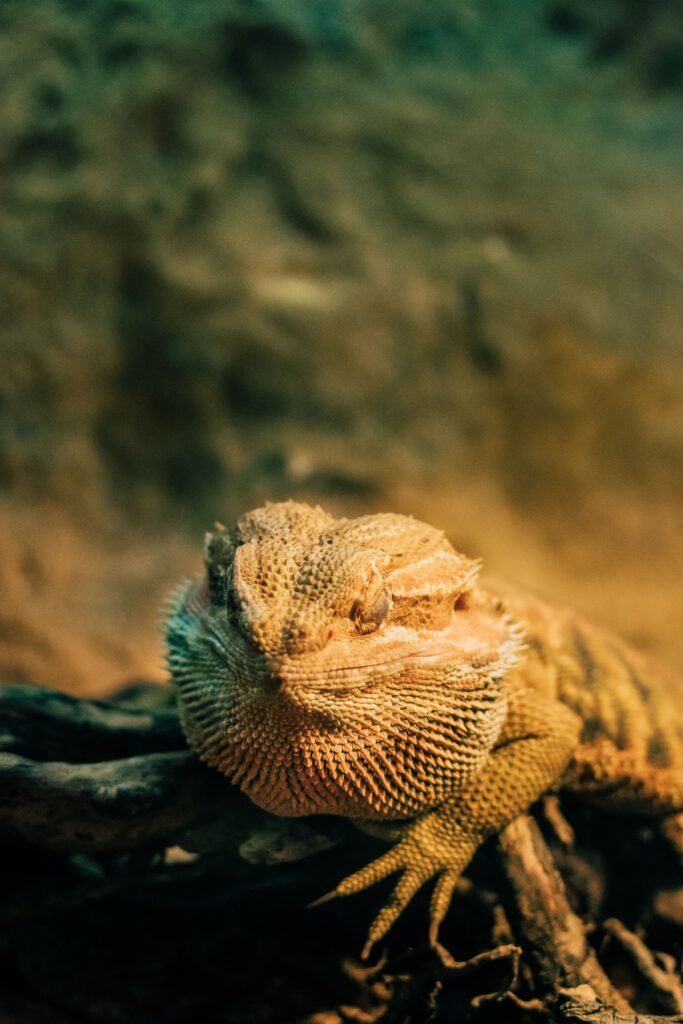
The same behavior can mean four different things. A dark beard can signal a threat display, mating drive, illness, or cold, and only context tells you which.
Bearded dragons (Pogona vitticeps) communicate constantly. The problem is that most owners are only fluent in the obvious signals, the dark beard, the wide-open mouth, and miss the quieter ones that often carry more diagnostic value.
This guide decodes the full behavioral vocabulary of bearded dragons: what each behavior means, what context changes the interpretation, and when a behavior that looks harmless is actually a signal worth acting on.

Before you panic over anything I do, check my temperature and what else is going on first. The same behavior can mean four different things, and context is what tells them apart.
🧠 How to Read Bearded Dragon Behavior
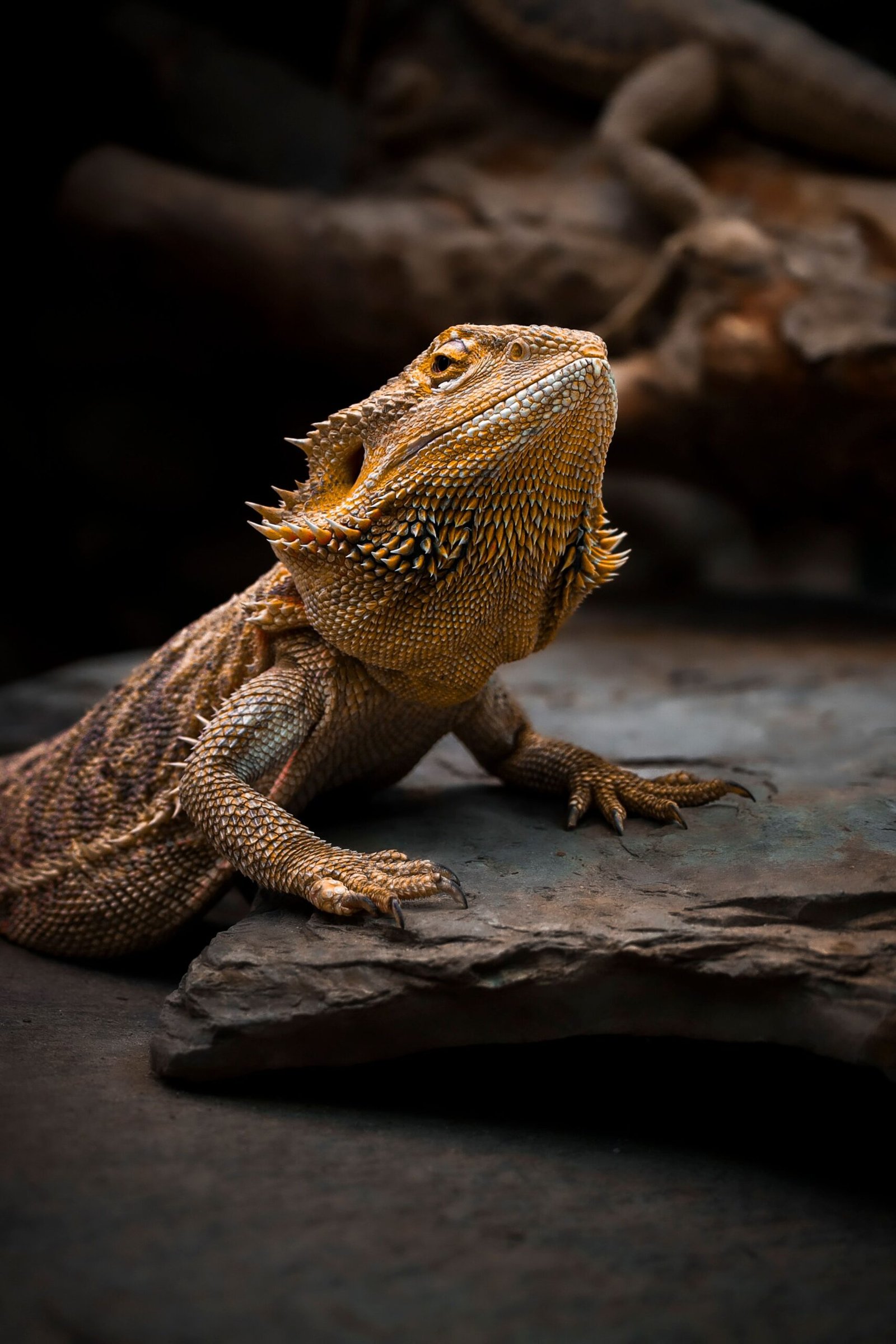
The most important skill in reading bearded dragon behavior is contextual interpretation. Almost every behavior has multiple possible meanings depending on circumstances.
A dark beard can mean threat display, mating drive, illness, or cold. The same behavior, four different diagnoses. Context, temperature, time of day, age, recent events, what else is happening simultaneously, is what separates a correct read from a wrong one.
The behavioral analysis framework:
- What behavior am I seeing?
- When is it happening (time of day, time of year)?
- What body region is involved (beard only, body, localized area)?
- What else is the dragon doing simultaneously?
- Has anything changed recently in the environment?
Apply this framework to any behavior before drawing a conclusion.
🤝 Social and Communication Behaviors
Head Bobbing
Slow, deliberate head bobbing: Dominance signal. “I’m the dragon in charge here.” Directed at perceived rivals, reflections, other animals, and sometimes owners.
Fast, urgent head bobbing: More intense dominance or threat response. In males during breeding season, rapid head bobbing accompanies courtship.
What it means: Almost always social signaling. Not a health concern. If occurring in response to a reflection, cover the enclosure sides.
Arm Waving
A slow circular wave of one forearm, sometimes alternating. This is a submissive acknowledgment, “I see you, I’m not a threat.” Babies and juveniles wave in response to larger dragons (or owners who head-bob at them). Adults occasionally wave in response to other animals.
What it means: Normal social behavior. If your dragon waves at you, it perceives you as a potential dominance signal source and is responding submissively. Not a concern.
Beard Darkening
In an active, warm dragon: Territorial display, mating drive (males), or response to perceived threat.
In a cold or lethargic dragon: Thermoregulatory response or illness signal. Not social communication.
Context is everything: A male with a black beard who is actively basking, alert, and eating normally is displaying. A dragon with a dark beard who is lethargic, dark across the whole body, and not eating is sick until proven otherwise.
Tongue Flicking
Normal chemosensory behavior. Bearded dragons use their tongues to gather chemical information from the environment. Frequent tongue-flicking in a new environment is orientation behavior. Tongue-flicking toward food is pre-feeding interest.
What it means: Normal in all contexts. Not a health concern.
Hissing
An audible defense signal. The dragon feels directly threatened. Usually accompanies open-mouth posturing and full defensive display.
A dragon with a dark beard who is lethargic, dark across the whole body, and not eating is sick until proven otherwise.
What it means: Reduce whatever stimulus is causing the threat response. Give the dragon space.
🌡️ Thermoregulation Behaviors
Basking (Classic Flat Posture)
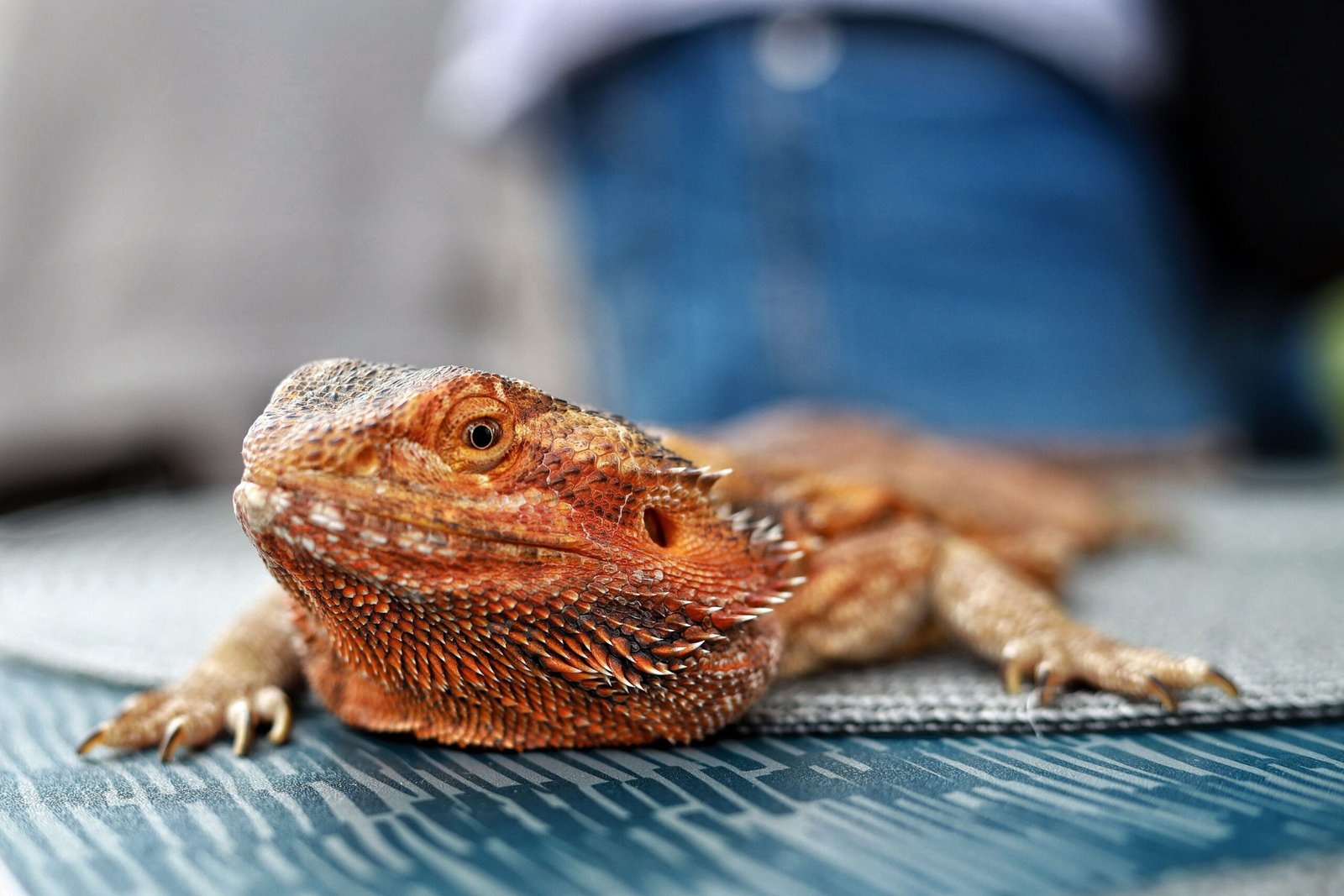
The bearded dragon flattens its body, extends its limbs, and positions itself directly under the heat and UVB source. This maximizes surface area for heat and UV absorption.
What it means: Correct thermoregulatory behavior. The dragon is doing exactly what it should.
Gaping (Open Mouth While Basking)
Thermoregulatory cooling when the dragon has reached its target body temperature. The open mouth allows evaporative cooling from mucous membranes.
What it means: The basking spot is adequate and the dragon is successfully reaching temperature. If it persists for hours without closing, check that the basking spot isn’t too hot (above 115°F).
Pressing Against the Cool Side
The dragon seeks out the coolest available surface and presses against it.
What it means: The enclosure is too warm, or the dragon has reached maximum body temperature and needs to cool down. Check that the basking spot isn’t running above 115°F and that the cool side is genuinely cooler (78-82°F).
Glass Surfing
Repeated locomotion against the enclosure glass. See the full glass surfing guide for complete diagnosis, common causes include reflection, hunger, incorrect temperatures, inadequate enclosure size, and gravid females seeking a lay site.
🍽️ Feeding and Foraging Behaviors
Stalking and Rapid Strike
Active, focused pursuit of moving prey. This is healthy predatory behavior. A bearded dragon that stalks and strikes efficiently is engaging normally with feeding.
What it means: Good feeding drive. Positive indicator of health and appropriate temperature.
Ignoring or Walking Past Prey
A dragon that’s in the enclosure with moving feeders and shows zero interest.
What it means: Could be satiated (normal), could be too cold (check basking temperature), could be pre-shed, could indicate illness. Evaluate in context of recent feeding history and enclosure temperatures.
Licking the Enclosure Floor, Walls, or Decor
Chemosensory exploration, gathering information about new items in the environment. Normal for recently introduced decor, substrate, or a new enclosure.
Persistent licking of one specific spot: Could indicate smell of previous occupant, residue, or rarely a mineral-seeking behavior.
What it means: Usually normal. If the dragon is licking substrate heavily and eating it, this suggests mineral deficiency or behavioral stimulation-seeking, address the substrate type and enrichment level.
😰 Stress and Fear Behaviors
Stress Marks Appearing
Dark oval patches appearing on the belly and chin (see stress marks article for full diagnosis). A real-time indicator of environmental stress.
Flattening and Widening the Body
The dragon flattens itself to the ground and spreads its body wide. This is a defense response, appearing larger and less easy to swallow for a predator.
In context of handling: The dragon is stressed. End the session calmly.
In context of a perceived threat (other animal visible): Remove the stressor.
Digging
In a female, combined with glass surfing: Gravid, provide a lay box immediately.
In any dragon exploring the enclosure: Normal environmental investigation and substrate enrichment behavior.
In a dragon during fall/winter: Brumation preparation, seeking a burrow site.
💕 Reproductive Behaviors
Head Bobbing and Black Beard in Males (Spring/Summer)
Peak mating drive behavior. Directed at females, perceived rivals, and reflections. May include persistent glass surfing.
What it means: Normal seasonal behavior. Increased handling and out-of-enclosure time can help redirect the energy.
Gravid Coloration in Females
Some females display darker or more mottled coloration when carrying eggs. Combined with digging, glass surfing, and a rounder abdomen, this is a gravid female ready to lay.
What to do: Provide a lay box.
Cloacal Prolapse
Reddish tissue visible at the vent that the dragon cannot retract. This is a medical emergency requiring same-day veterinary care.
😴 Rest and Sleep Behaviors
Eyes Closed While Basking
Brief eye-closing during basking is normal, the dragon is relaxed and warm. Prolonged closed eyes throughout the day combined with lethargy is a health concern.
Sleeping in Unusual Positions or Locations
Occasional variation in sleep location is normal. Consistently sleeping in odd positions (propped upright against the wall, head at a severe angle) can indicate discomfort, evaluate for illness.
Twitching During Sleep
Mild muscle twitches during sleep are normal (as in many animals). Significant tremors, repetitive muscle movements, or convulsions during sleep are not normal, seek veterinary assessment.
🤒 Behaviors That Signal Illness
These behavioral patterns, particularly in combination, indicate illness rather than normal variation:
- Persistent lethargy that doesn’t resolve when the enclosure reaches correct temperature
- Repeated tilting of the head backward (“star gazing”), a neurological sign associated with adenovirus and other conditions
- Inability to right itself when placed upside down, severe neurological impairment
- Repetitive circling, neurological sign
- Rubbing the face excessively against surfaces, may indicate eye infection, mouth discomfort, or mite infestation
- Bloated abdomen that doesn’t resolve, impaction, reproductive issue, or internal infection
- Trembling or shaking of limbs at rest, early MBD or hypocalcemia
Any of these behaviors warrants veterinary assessment without extended delay.
📚 Recommended Reading: Why Is My Bearded Dragon Turning Black? 8 Causes Ranked
📋 Quick-Reference Behavior Index
| Behavior | Most Likely Meaning | Action |
|---|---|---|
| Head bobbing | Dominance/mating signal | Normal, cover enclosure sides if at reflection |
| Arm waving | Submissive acknowledgment | Normal |
| Dark beard, alert | Social display | Normal |
| Dark beard, lethargic | Illness or cold | Check temperature, evaluate for illness |
| Gaping at basking spot | Thermoregulation | Normal |
| Gaping away from basking spot | Possible respiratory infection | Vet visit |
| Glass surfing | See specific causes | Diagnose and fix root cause |
| Digging (female) | Gravid, needs lay box | Provide lay box immediately |
| Arm trembling | Early MBD or calcium deficiency | Vet assessment |
| Star gazing | Neurological sign | Same-day vet |
| Stress marks | Environmental stressor present | Identify and fix stressor |
| Arm waving at you | Submissive response | Normal |
✅ Takeaways
- Bearded dragon behavior requires contextual interpretation, the same behavior has different meanings in different circumstances
- Head bobbing and arm waving are normal social communication signals, not health concerns
- Dark beard in an active, warm dragon = social display; dark beard in a lethargic, cold-seeming dragon = investigate for illness
- Gaping at the basking spot is normal thermoregulation; gaping away from the basking spot with audible breathing is a respiratory infection signal
- Digging in a female over 12 months = gravid; provide a lay box immediately
- Star gazing, circling, inability to right itself, and repetitive tremors at rest are neurological signs requiring same-day veterinary assessment
- Building the habit of daily behavioral observation is the most effective early-warning system for health problems
Common questions
Why does my bearded dragon wave its arm?+
What does a dark or black beard mean?+
Is head bobbing normal?+

Beardies World Editorial Team
Every guide on Beardies World is written and maintained by our editorial team. We are not veterinarians, and these guides are general care information, not a substitute for an exam. If your dragon seems unwell, see a reptile vet. If you spot a mistake, email info@beardiesworld.com and we will correct it.
How we write and correct our guides →