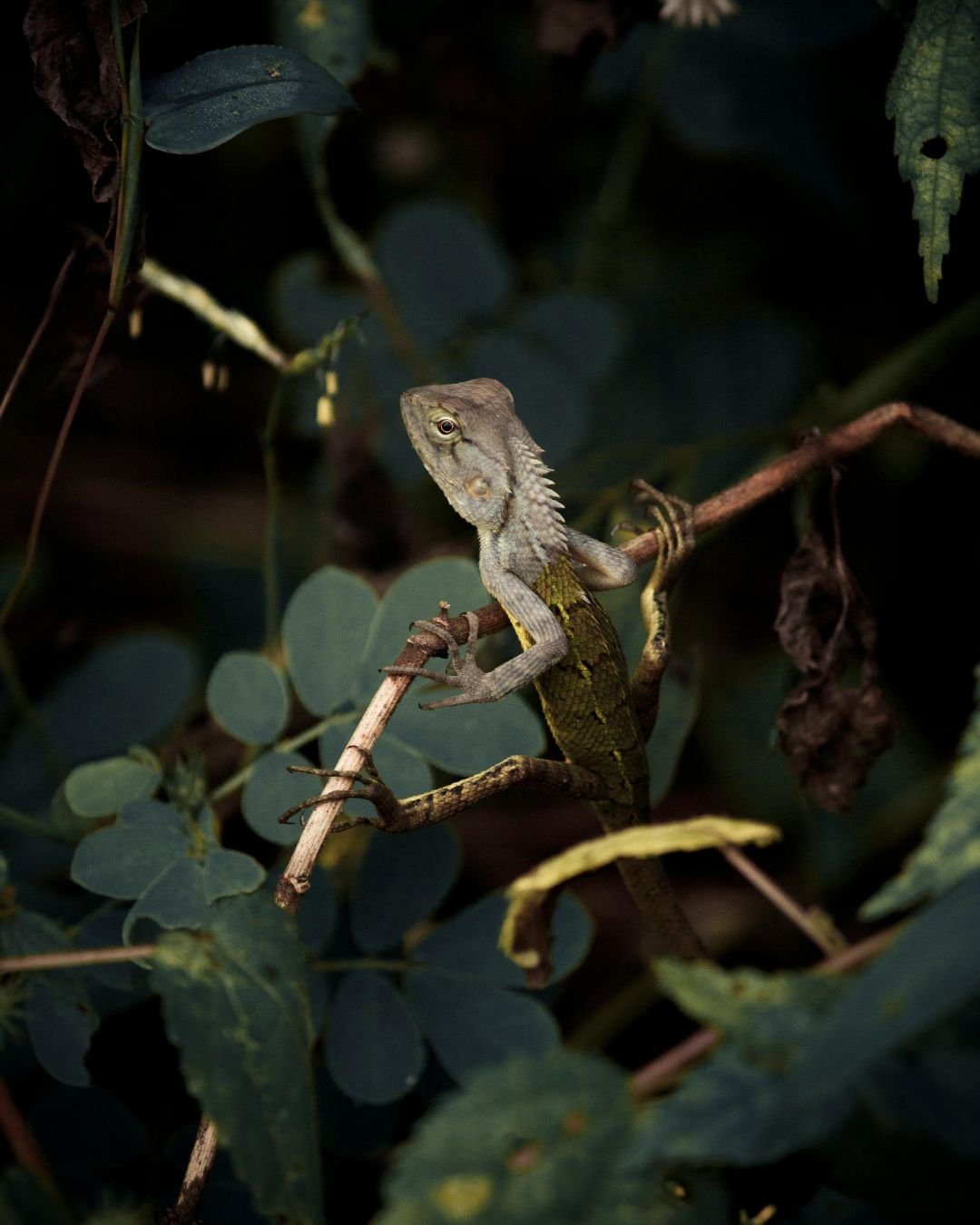
Your bearded dragon’s color changed. The beard went dark, the body color deepened, or both, and now you’re trying to figure out whether this is normal or a sign of something wrong.
Here’s what you need to know first: bearded dragons change color regularly for multiple reasons, and not all of them are alarming. But some are. Knowing which category your dragon is in requires reading the full context, not just the color.

Before you read anything into a dark dragon, point an infrared gun at the basking surface. Cold is the single most common cause of blackening, and it's the one you can fix in an afternoon. Then read the rest in context: WHICH part darkened (beard alone vs whole body), and what else changed. Color on its own tells you almost nothing.
🎨 How Bearded Dragon Color Change Actually Works
Bearded dragons change color through chromatophores, specialized pigment cells in the skin that can expand or contract to darken or lighten different body regions. This is a voluntary and involuntary physiological mechanism, not a conscious decision.
The beard (gular region) and the body can change color independently, which is important for diagnosis. A dark beard on a warm, active dragon means something different than a dark beard combined with a dark body on a cold, lethargic dragon.
The diagnostic framework: Always evaluate color in context of temperature, behavior, recent events, and which body areas are affected. Color alone isn’t enough.
❄️ Cause 1: Cold Temperature (Most Common)
A bearded dragon that’s too cold will darken, typically across the entire body, not just the beard. This is a thermoregulatory response: darker pigmentation absorbs more infrared radiation, helping the dragon warm up faster.
Signs this is the cause:
- Full body darkening, not just the beard
- Dragon positioned directly under the basking light but still dark
- Lethargic, slow movements
- Color lightens once the dragon reaches proper basking temperature
Verification: Check the actual basking surface temperature with an infrared thermometer. It should read 100-110°F. If it’s reading 85-90°F, the basking spot is inadequate, and temperature is almost certainly the cause.
Fix: Increase basking spot temperature to the correct range. Upgrade bulb wattage, lower the basking platform, or reposition the enclosure. A dragon that consistently can’t reach proper temperature will be chronically dark, lethargic, and nutritionally compromised, digestion requires adequate heat.
😰 Cause 2: Stress
Stress is the second most common cause of persistent black coloring in bearded dragons, and it’s the one that new owners most frequently cause accidentally.
Signs this is the cause:
- Dark beard and/or body in an otherwise warm enclosure
- Occurs during or after specific events (handling, new environment, new animal nearby)
- Dragon retreats to hide, glass surfs, or shows defensive posturing
Common stress triggers that cause blackening:
If you’ve identified and eliminated the trigger and your dragon is still black days later, the cause is likely something else.
- A new enclosure or recent move
- Seeing its own reflection in glass panels
- A cat, dog, or other animal able to see or approach the enclosure
- Excessive handling before acclimatization is complete
- Loud environment (speakers, TV near the enclosure)
- Another bearded dragon visible from the enclosure
- Recent vet visit or transportation
Here’s where things change: stress-related black coloring typically resolves once the stressor is removed. If you’ve identified and eliminated the trigger and your dragon is still black days later, the cause is likely something else.
Fix: Apply black background paper to the back and sides of glass enclosures. Ensure no other animals have visual access to the enclosure. Reduce handling during the acclimatization period (first 2-4 weeks in a new home).
💕 Cause 3: Mating and Dominance Behavior
A black beard in an otherwise healthy, active adult dragon, particularly a male, is a normal part of sexual and social signaling.
Signs this is the cause:
- Black beard specifically (not full body darkening)
- Dragon is alert, active, basking normally, eating normally
- Adult dragon, typically 12+ months
- May accompany head bobbing, arm waving, or puffing up
- More common in spring months as photoperiod increases
Male bearded dragons darken their beards during territorial displays, in the presence of other dragons (even through glass or on a screen), and during mating season. This is completely normal behavior, not a health concern.
Female darkening during gravid phase: Gravid females (carrying eggs) can darken significantly, particularly the abdomen. If your female is adult, appears heavier than normal, and shows digging behavior alongside color changes, she may be gravid.
🤒 Cause 4: Illness
This is the cause that creates genuine concern, and it’s recognizable because it persists without an obvious environmental or behavioral trigger.
Signs illness may be causing dark coloring:
- Persistent darkness that doesn’t resolve when the enclosure is at proper temperature
- Lethargy that goes beyond normal rest periods
- Appetite loss combined with dark coloring
- Any physical symptoms: discharge from eyes or nose, labored breathing, abnormal stool, swelling
- Dragon appears dull-eyed, unresponsive to stimulation
- Color has been dark for more than 3-5 days without clear cause
Common illnesses that cause darkening:
- Parasitic infection (coccidia, pinworms, flagellates)
- Respiratory infection
- Metabolic bone disease in active progression
- Viral or bacterial systemic infection
- Adenovirus (“star gazing disease”), watch for neurological symptoms alongside dark coloring
What actually matters here: illness-related dark coloring is a symptom, not a diagnosis. You need a vet to determine the underlying cause. If your dragon is dark, lethargic, and off food with no identifiable environmental explanation for more than 3-5 days, schedule a reptile vet appointment.
🔄 Cause 5: Shedding
Bearded dragons going through a shedding cycle frequently show temporary darkening as the old skin separates from the new layer beneath.
Signs shedding is the cause:
- Dull, grayish overall color (rather than intensely black)
- Skin beginning to peel at edges (often starting at the head)
- Dragon appears slightly puffed
- Rubbing against decor
What to do: 20-minute lukewarm baths every 2-3 days to support skin loosening. Don’t manually peel shedding skin unless it’s been retained around eyes, toes, or tail for more than a week. Color normalizes fully within a few days of completing the shed.
☀️ Cause 6: Thermoregulation Signaling
Beyond responding to cold, bearded dragons actively darken specific body regions to maximize heat absorption during the basking process. You may observe a dragon darkening its dorsal (back) surface while basking even when the enclosure is otherwise warm.
This is an active thermoregulatory behavior, the dragon is fine-tuning its heat intake. It’s not a stress response and not a health concern.
Signs this is the cause:
- Darkening occurs specifically while actively basking
- Localised to the dorsal surface
- Dragon appears alert and comfortable, not stressed
- Color lightens again once the dragon has reached its target body temperature
😠 Cause 7: Agitation or Threat Response
When a bearded dragon feels threatened, by a perceived predator, an unfamiliar person handling it, or a direct challenge from another animal, it may rapidly darken the beard and flatten the body to appear larger.
This is an acute response, not a persistent state. The dragon returns to normal coloring within minutes once the threat is gone.
Signs this is the cause:
- Sudden darkening during a specific interaction
- Accompanied by beard puffing, hissing, or an open mouth
- Resolves quickly when stimulus is removed
This is normal defensive behavior, not a health concern. However, a dragon that shows this response frequently to routine human interaction hasn’t been adequately socialized.
🌑 Cause 8: Normal Resting Coloration
Some bearded dragons naturally display darker baseline coloration, either as a genetic trait or during relaxed rest states. Not every dark dragon is stressed or cold.
Signs this is normal:
- Dragon is warm, eating well, active at appropriate times
- No other behavioral signs of stress or illness
- Darkness is consistent and stable, not a new change
If your dragon has always been on the darker side and nothing else has changed, this may simply be its normal coloration.
🚨 When Black Coloring Requires Urgent Attention
See a reptile vet within 24-48 hours if black coloring is accompanied by:
- Neurological symptoms: head tilting (“star gazing”), circling, seizure-like movements
- Inability to move normally or hold body weight
- Mucus from nose or mouth
- Abdomen that appears swollen or abnormally dark on the underside
- Complete refusal to eat for more than 5-7 days with no environmental explanation
- Rapid weight loss visible to the eye
- Eyes sunken, closed, or showing discharge
📚 Recommended Reading: Why Is My Bearded Dragon Not Eating?
✅ Takeaways
- Black coloring in bearded dragons has 8 distinct causes, temperature and stress account for the majority of cases
- A dark dragon in a cold enclosure is thermoregulating, verify basking surface temperature with an infrared gun before assuming illness
- Adult male black bearding during active, healthy behavior is normal mating/dominance signaling
- Illness-related darkening persists without environmental cause, combines with lethargy and appetite loss, and often has additional physical symptoms
- Shedding produces a dull grayish darkening, not intense black, and resolves with the shed cycle
- Stress-related darkening resolves when the stressor is identified and removed, if it doesn’t, look deeper
- Any black coloring combined with neurological symptoms, inability to move, respiratory symptoms, or prolonged appetite loss requires urgent veterinary attention
- Always diagnose color change by context, temperature, behavior, age, recent events, not by color alone
Common questions
Why is my bearded dragon turning black?+
Is a black beard on a bearded dragon normal?+
When is black coloring in a bearded dragon an emergency?+

Beardies World Editorial Team
Every guide on Beardies World is written and maintained by our editorial team. We are not veterinarians, and these guides are general care information, not a substitute for an exam. If your dragon seems unwell, see a reptile vet. If you spot a mistake, email info@beardiesworld.com and we will correct it.
How we write and correct our guides →