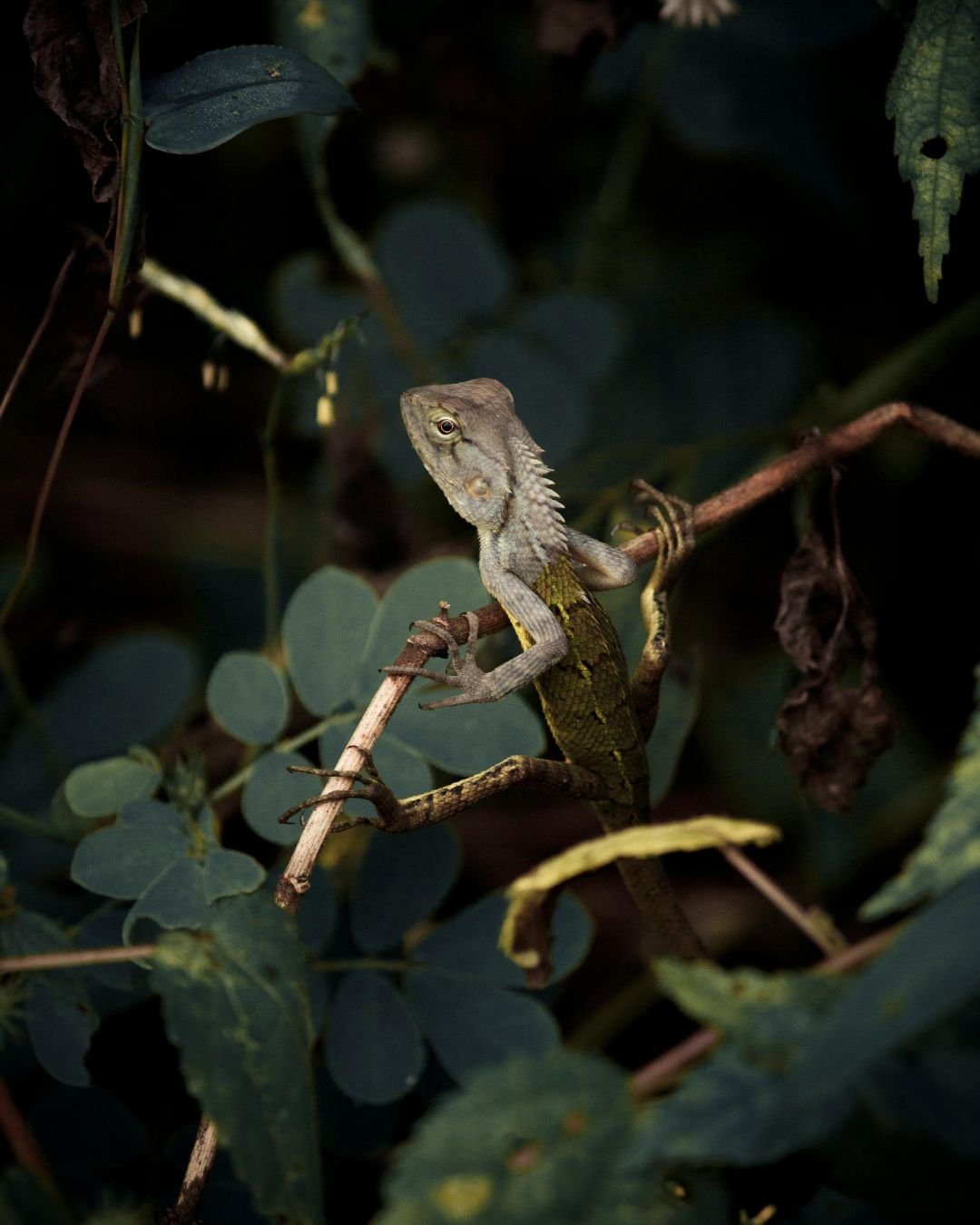
Dehydration is one of the most common conditions in captive bearded dragons, and one of the easiest to miss. Unlike a visibly sick dragon, a dehydrated dragon often looks almost normal until the deficit has been building for weeks.
By the time the obvious signs appear, the underlying condition has usually been present for a while. Here’s how to identify it early, fix it quickly, and build the routine that prevents it from recurring.

Don't trust the water bowl to do the job, most bearded dragons never reliably drink from still water. Watch the urates instead: the white part of the stool should be white. Any persistent yellow or orange is the earliest hydration warning you'll get, long before sunken eyes or wrinkled skin show up.
💧 Why Bearded Dragons Get Dehydrated in Captivity
In the wild, bearded dragons obtain most of their water from food, insects, plants, and occasional morning dew licked from rocks and vegetation. They’re adapted to extract moisture from their diet rather than relying on standing water sources.
In captivity, the hydration system breaks down in several predictable ways:
Failure to recognize water dishes. Many bearded dragons don’t instinctively recognize a still water bowl as a water source. They evolved to drink from moving water, dew, and high-moisture food, a ceramic bowl of still water doesn’t trigger the drinking response reliably.
Low-moisture diet. A diet heavy on dry feeder insects and low on high-moisture greens, fruits, and vegetables delivers less dietary moisture than a varied wild diet would.
Enclosure humidity too low. Extremely dry enclosure air (below 20% relative humidity) increases transepidermal water loss, moisture that evaporates through the skin continuously.
High enclosure temperatures. Proper basking temperatures are necessary and non-negotiable. But a dragon that basks for extended periods in a very hot spot loses more water through respiration than a dragon in a more moderate environment.
Illness. Vomiting, diarrhea, and systemic infection all accelerate fluid loss.
Understanding which of these applies to your dragon’s situation is what shapes the prevention strategy.
🔍 Signs of Dehydration: Early, Moderate, and Severe
Early Signs (Often Missed)
- Slightly wrinkled skin along the sides and flanks, looks like very fine creasing rather than the smooth skin of a well-hydrated dragon
- Urates (the white portion of the stool) that appear bright yellow or orange rather than white, indicates concentrated uric acid from reduced fluid intake
- Slightly tacky or “dry” appearance to the gum tissue when the mouth opens
- Mild lethargy that’s easy to attribute to other causes
Moderate Signs
- Visible skin wrinkling on the sides, neck, and around the legs
- Eyes that appear slightly sunken in their sockets
- Urates that are consistently orange or brownish
- Reduced defecation frequency
- Skin that doesn’t return quickly to its normal position after gentle pinching
Severe Signs
- Deeply sunken eyes, the eye sockets appear hollow
- Pronounced skin wrinkling across the body
- Very dark orange or brown urates, or absent urates
- Lethargy, the dragon is difficult to rouse and shows minimal response
- Dry, sticky mucous membranes visible when the mouth opens
- Complete appetite loss
Severe dehydration is a veterinary emergency. A dragon at this stage needs fluid support beyond what bathing and dietary changes can deliver.
In a dehydrated dragon, it returns slowly or remains partially tented.
🏠 The Skin Pinch Test, And Its Limitations
The skin pinch (tent) test is commonly recommended for assessing dehydration: gently pinch a small fold of skin on the side of the body and release. In a well-hydrated dragon, the skin snaps back immediately. In a dehydrated dragon, it returns slowly or remains partially tented.
It works, with caveats. In older dragons and individuals with naturally looser skin, the pinch test may show slow return even at normal hydration levels. Use it as one data point alongside other signs, not as a standalone test.
Where to pinch: The lateral body wall, between the front and hind limbs. Avoid the neck and tail areas where skin naturally has different elasticity.
✅ How to Rehydrate a Bearded Dragon
Step 1: Daily warm baths (most important)
20-30 minute baths in 95-100°F water, daily until hydration signs normalize. Bearded dragons absorb water through their cloaca (the vent area) as well as drink during baths. The dual-pathway absorption makes bathing the most effective acute rehydration method available at home.
Signs the bath is helping: The dragon drinks visibly from the bath water. Urate color transitions from orange toward white within a few days. Skin wrinkles reduce.
Step 2: Increase moisture through food
Add high-moisture feeders and vegetables immediately:
- Hornworms (85% moisture), most effective single dietary moisture source
- Cucumber (96% moisture)
- Watermelon (92% moisture, seedless, small amounts)
- Zucchini and yellow squash (high moisture)
- Fresh, wet greens rather than dried or wilted
Step 3: Water dish positioning
Move the water dish to the warm side of the enclosure, near the basking area. A bearded dragon is more likely to encounter and drink from a water dish located where it spends most of its active time. Ensure the dish is shallow enough that the dragon can drink easily without effort.
Step 4: Misting
Light misting of the dragon’s face once daily provides moisture that the dragon can lick off. Don’t mist the enclosure interior heavily, excess humidity in a bearded dragon enclosure promotes respiratory infections.
🔄 Long-Term Prevention: Daily Habits That Maintain Hydration
The goal is a daily routine that ensures consistent fluid intake without depending on the dragon to seek water voluntarily from a dish.
Twice-weekly baths (baseline for healthy adults). Even when no dehydration signs are present, regular bathing maintains baseline hydration and prevents the gradual deficit from accumulating silently.
High-moisture greens daily. Collard greens, mustard greens, and dandelion greens all have 85-90% moisture content. A full daily salad bowl provides meaningful fluid intake alongside nutrition.
Hornworms in regular rotation. 2-3 times per week as part of the feeder rotation. The hydration they deliver is consistent and palatable.
Fresh water always available. Change the water dish daily, stale water in a warm enclosure grows bacteria rapidly. Use a shallow dish the dragon can easily access.
Monitor urate color weekly. Bright white urates indicate good hydration. Any persistent yellow or orange coloring is the earliest indicator that the fluid intake needs to increase. Building this into your weekly observation routine catches dehydration before it becomes a problem.
📚 Recommended Reading: How to Bathe a Bearded Dragon: The Right Method, Temperature, and Frequency.
🩺 When Dehydration Requires Veterinary Attention
Home rehydration through bathing and dietary changes is appropriate for mild to moderate dehydration. See a reptile vet promptly if:
- Sunken eyes that don’t improve after 3-5 days of daily baths
- The dragon is not drinking during baths and showing no improvement
- Severe lethargy, the dragon isn’t responding normally to stimulation
- Dehydration is accompanied by vomiting, diarrhea, or any other illness signs
- The dragon is a baby under 3 months showing moderate dehydration signs, their smaller body mass means faster deterioration
Veterinary treatment for significant dehydration typically involves subcutaneous (under-skin) or intraosseous fluid administration, faster and more effective than oral or bath rehydration for severe cases.
✅ Takeaways
- Dehydration is common in captive bearded dragons because most don’t reliably drink from still water dishes, hydration must come primarily from food and baths
- The earliest signs are wrinkled flank skin and orange/yellow urates, watch for these before the more obvious signs develop
- Daily 20-30 minute warm baths are the most effective acute rehydration method available at home
- Add hornworms, cucumber, and high-moisture greens immediately to increase dietary fluid intake
- Urate color is the most accessible ongoing hydration monitoring tool, white is good, orange or brown indicates deficit
- Twice-weekly baths as a baseline habit prevents chronic dehydration from developing silently
- Severely sunken eyes, sticky mucous membranes, and unresponsive lethargy require veterinary fluid therapy, home bathing alone isn’t sufficient at that stage
Common questions
How can I tell if my bearded dragon is dehydrated?+
What is the fastest way to rehydrate a bearded dragon at home?+
Why won't my bearded dragon drink from its water bowl?+

Beardies World Editorial Team
Every guide on Beardies World is written and maintained by our editorial team. We are not veterinarians, and these guides are general care information, not a substitute for an exam. If your dragon seems unwell, see a reptile vet. If you spot a mistake, email info@beardiesworld.com and we will correct it.
How we write and correct our guides →